
Czechoslovakia is a very long word, can you spell it?
That was the hottest riddle back in the second grade, and if you knew ball, you knew the correct answer was the easy way out. I-T spells it. Of course, any second grader who could actually spell out Czechoslovakia also deserved some respect, pulling that ‘ch’ sound out of a C-Z.
Anyways, that was my whole orientation to the Republic of Slovakia, which was untangling itself from the Czech Republic around the same time I learned that clever riddle. Other than that fact, and its general location, I couldn’t tell you much about the small and easily overlooked Central European country.
Then, in my early twenties, I discovered the world wonder that was RyanAir to a traveling college student. I was spending a summer backpacking Europe and I was making up my route as I went along. A fifteen euro flight was as good of a reason as any to head to a country I knew very little about.
I remember boarding that flight, wearing five days worth of layers to avoid luggage fees. I remember encountering a few folks who looked like regular backpackers. I was impressed by their literal backpacks, capable of carrying so much yet distributing it in a way where the weight was barely felt.
After some brief chatter, I found even more reason to be impressed. Both were graduate students at Harvard, in the middle of some sort of apprenticeship at the U.S. Embassy of Slovakia. The girl, Helen, had gotten fluent in Slovak. The guy, Martin, knew Bratislava inside and out. Oh, and he was staying long term at my hostel.
I managed to teach myself a few words of Slovak. Five. I remember greeting the hostel’s housekeeper and she responded enthusiastically in full Slovak sentences.
I had to pump the brakes. “Woah, I only know five words in Slovak,” I said slowly, extending a hand and counting off each one on each finger. The housekeeper generously returned the enthusiasm by repeating back each word affirmingly.
The hostel’s common area featured a binder full of things to do in the area. Castles and hikes were the main attraction, and I made a mental note of different mountains and trails.
I enjoyed being in a country that I didn’t think about too often. I don’t really like thinking of countries as obscure, because there are a good number of people who have never been to another country except that one. What’s obscure to one person is the whole world to another, you know? But I’ve got to acknowledge that up until this point my curiosity about Slovakia was minimal. Now, I couldn’t get enough of the materials scattered around my hostel, enlightening me on life around Bratislava.
I made plans to explore the capital later with Martin, and I figured he was about as good of a guide as I could ask for.
That summer, Slovakia had just formally switched to the Euro as their currency. This had the effect of making the prices of things around Slovakia feel much lower than anywhere else I had visited that year.
I spent some time at the Hypermarket, and I don’t think I can describe it any better than what that name implies. It was a grocery store merged with a department store, but unlike a Costco that feels like a massive warehouse, it felt like one store that morphed into another then into another.
I ended up being tempted into buying a jacket vest, and armload of different pastries and soft drinks. The exchange rate made me feel capable of living large, but for the most part that translated to carbohydrates. And I regret nothing. Those pastries, none of which I knew the names of, were all really good.
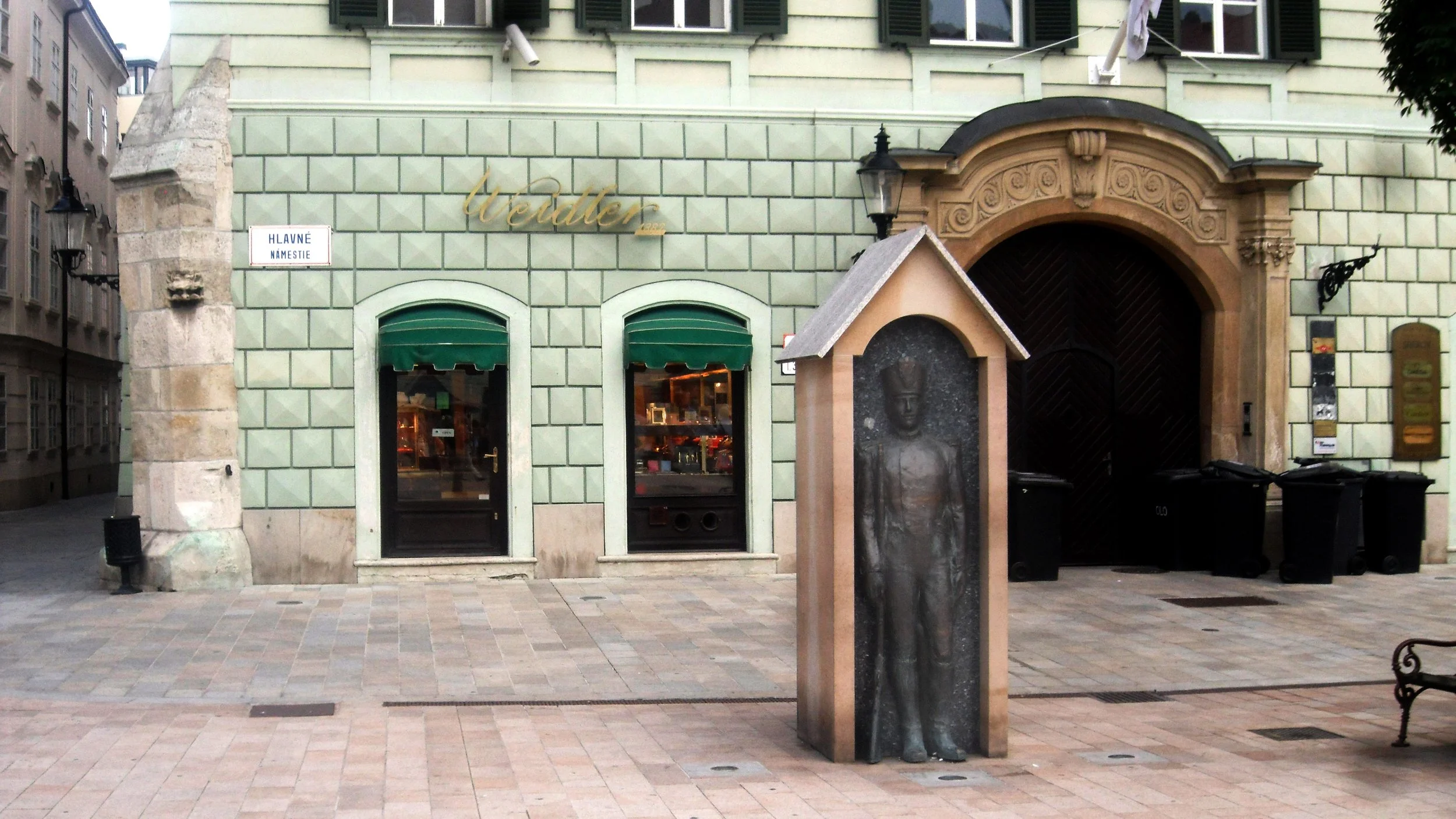
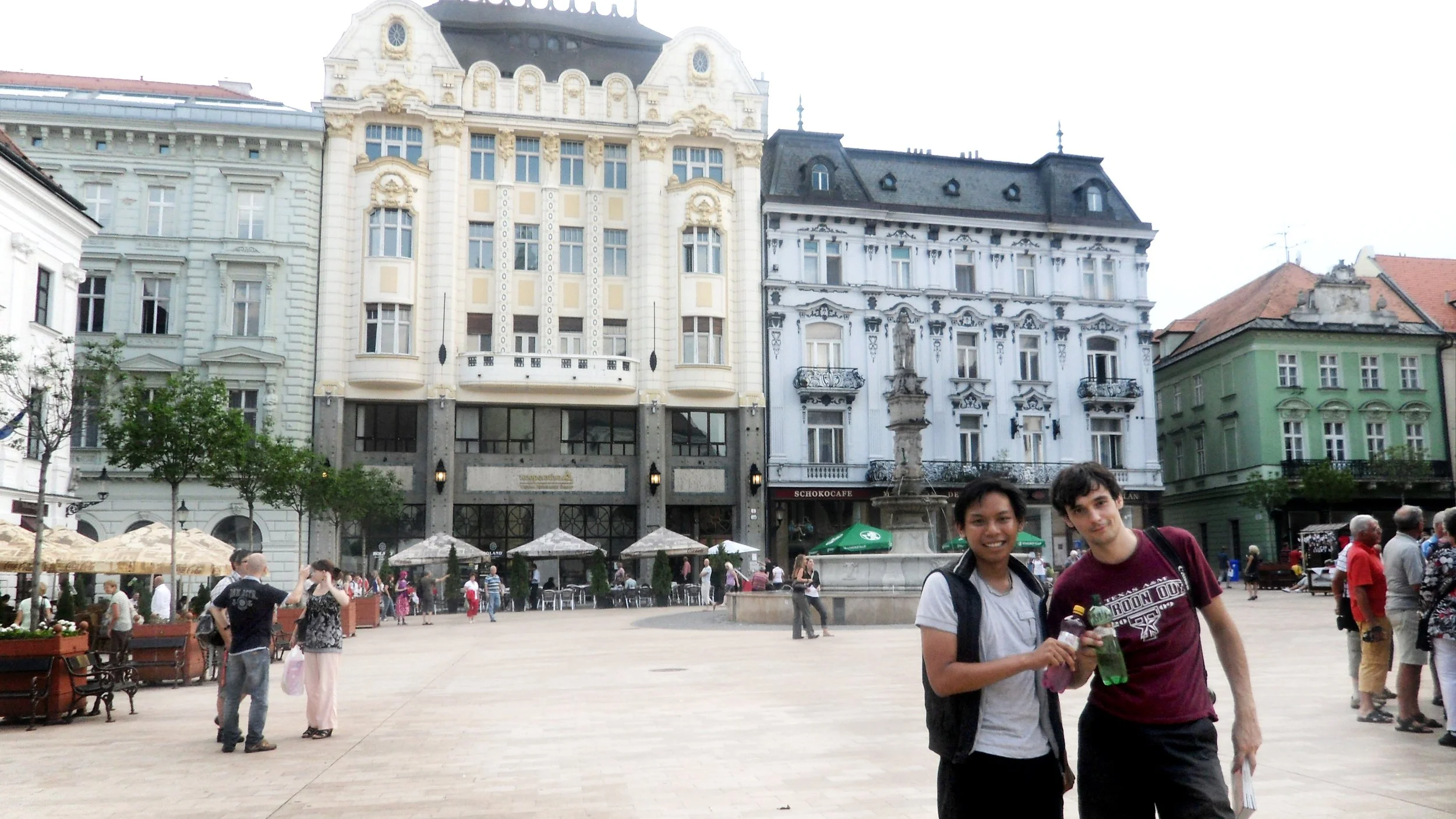
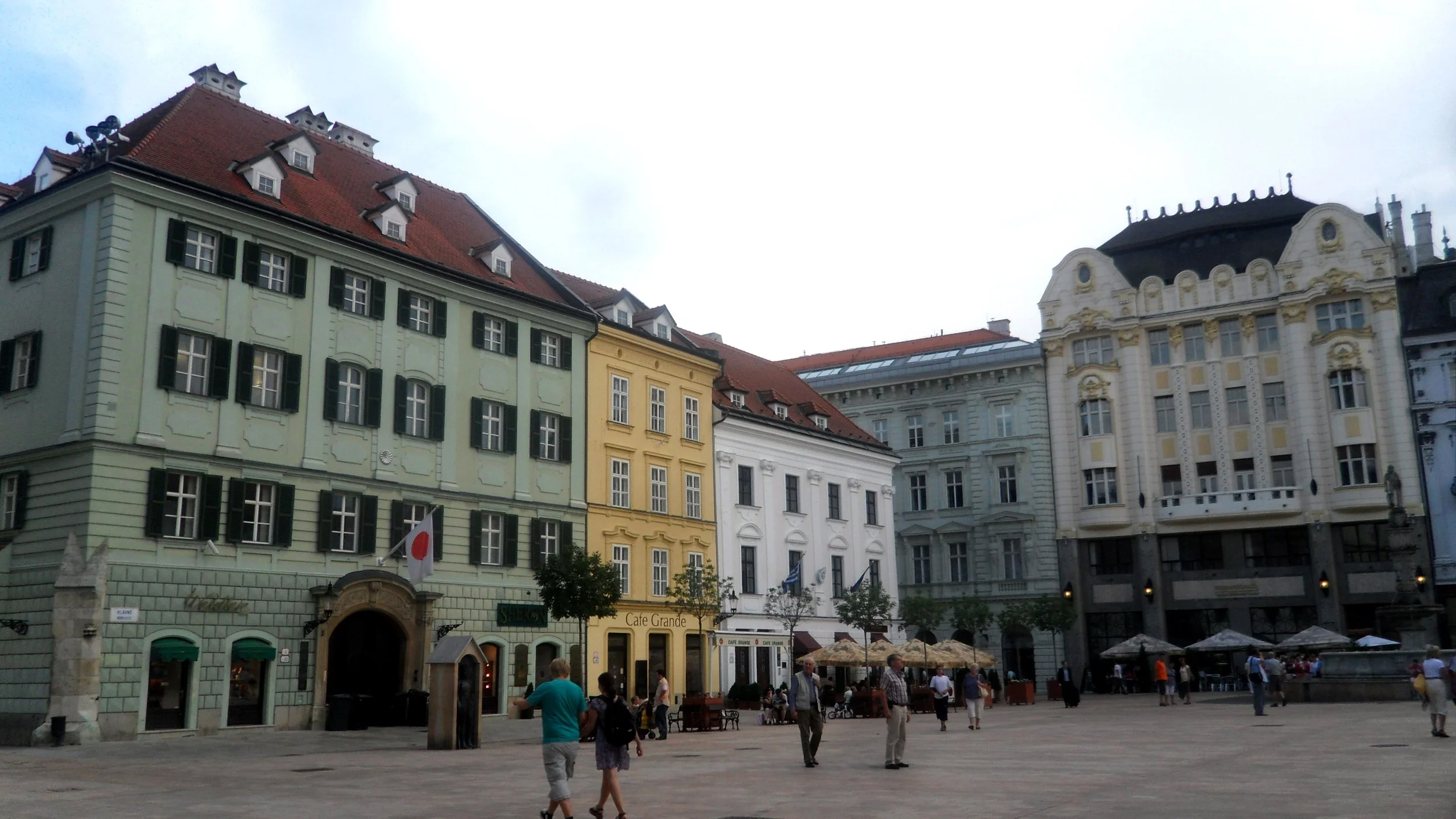
I enjoyed seeing Bratislava itself. The presidential palace was the main attraction. Grandiose and elevated, but it had a pretty different feel from most of the rest of the city. The walking areas of Central Bratislava featured a handful of quirky sculptures and displays, adding a playful element.
Martin and I had agreed to meet for dinner. I figured that by this point he’d know his way around Slovak cuisine pretty well. He didn’t have a specific restaurant recommendation but instead noted a part of town where we should walk until curiosity called us into somewhere.
There were enough good options there that it would be hard to go wrong.
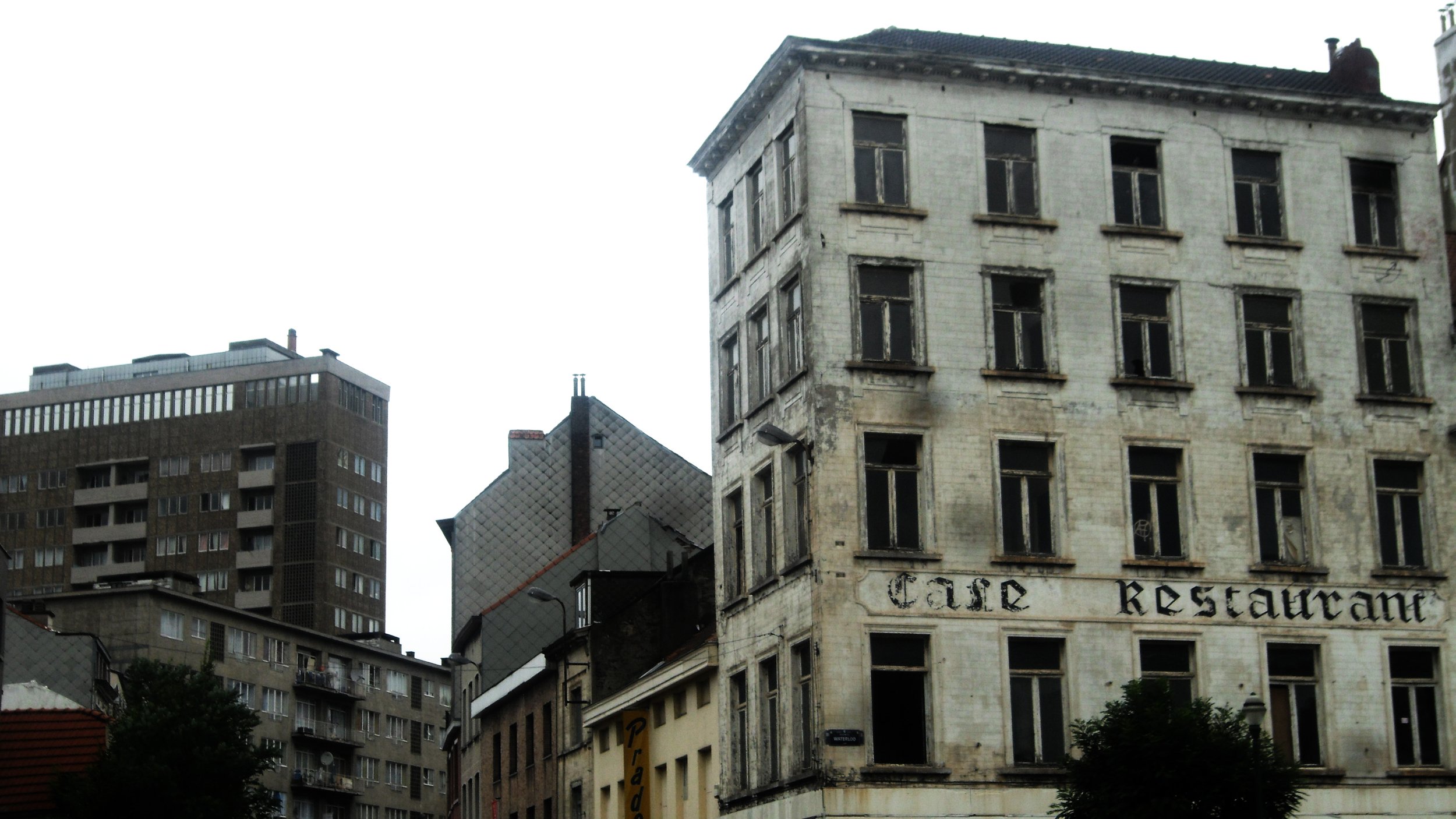
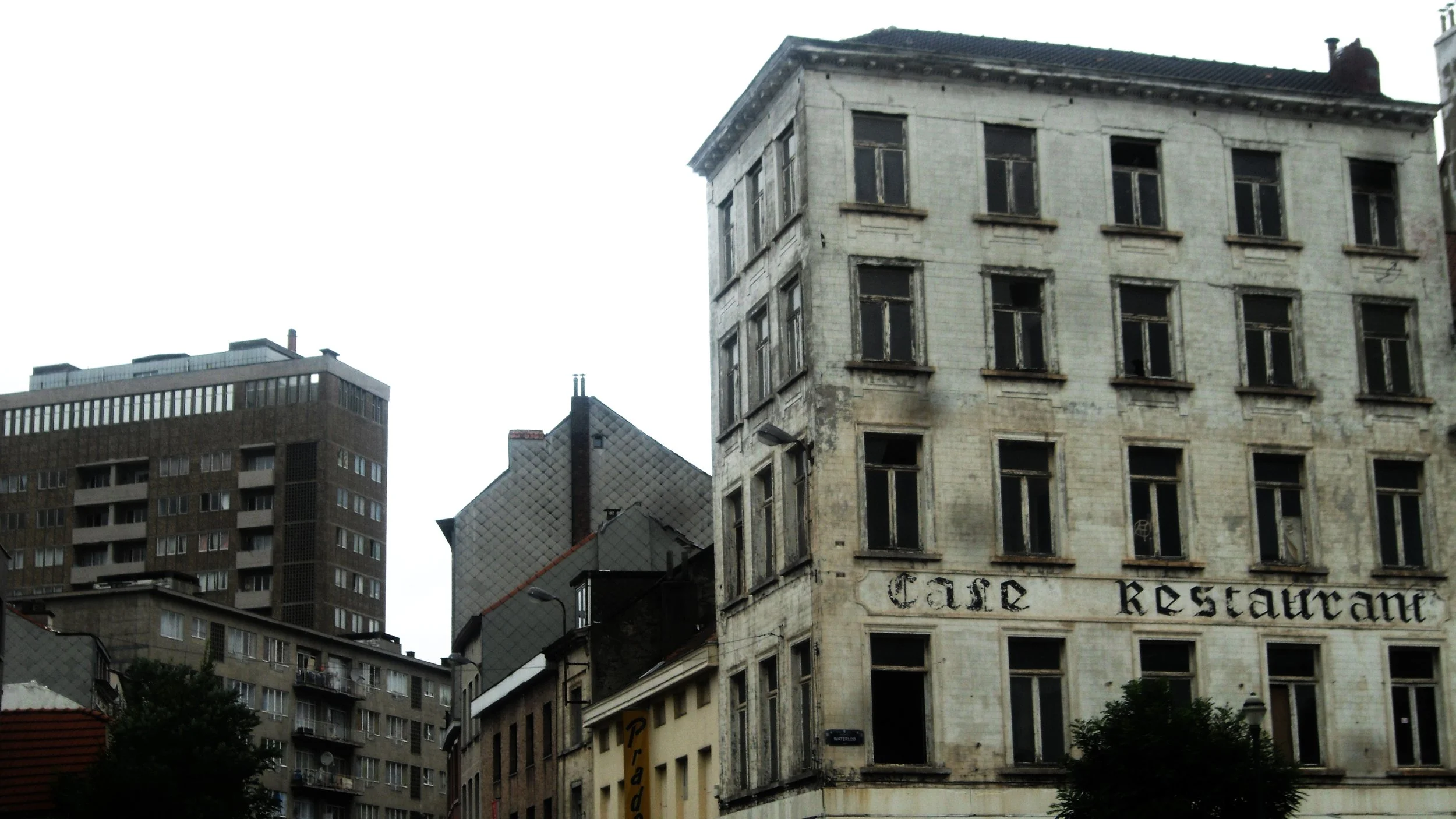
The neighborhood we walked through was fairly drab and gray, many buildings having a rigid uniformity that felt forced. These were traces of a Soviet legacy. Brutalism.
Actually, I don’t know enough about architecture to know if it was actually brutalist. But based on the sound of the name, I’d believe the neighborhood was pretty brutal. So much gray. So many cracks in the buildings.
That being said, many of those drab gray buildings also featured patches of painted murals. A sudden bright blue picture with sunflowers painted on the wood panels blaring up windows, for example. It was almost like a new, livlier era was ready to move on in.
Martin suggested we sit at some tables at an unmarked building that was apparently a restaurant. He took care of the ordering. The one woman working there brought us some very tall, very refreshing glasses of beer. And then, the real treat.
Our main dish was a plate full of something like gnocchi. Tiny, uneven dumplings coated in some sort of creamy cheesy sauce. On top of it, providing a punctuation of flavor were these thick diced pieces of cured, salty pork. Almost like bacon. Everything that was on that plate was perfect. It was a hearty meal, as I would anticipate from Central European comfort food, and executed flawlessly.
I thought about that dish for years. Really. Over time I would end up hammering my memories of that meal into Google’s search bar enough that I actually learned about what I was served.
Bryndzové halušky is widely considered Slovakia’s national dish. The part I thought of as gnocchi was the halušky – small dumplings made out of potatoes and flour. Bryndza was the other main element, a soft and sharp sheep’s cheese that gave so much depth of flavor to what could be an otherwise dense meal. And the topping really was pretty much bacon, fried to a crisp, with its fat dizzled back on to the dish for flavor.
Six years after my visit, I gave myself a cooking project. Trying to create 52 different dishes that had been tied to significant memories. One of those just so happened to be tied to an afternoon in Bratislava.
The dish was the invention of Slovak shepherds in the highlands, explaining the availability of sheep’s cheese. They needed a low-cost, high calorie meal that didn’t require sophisticated equipment to prepare.
The original dumplings were made with just flour, but potatoes were introduced to Europe in the 18th century by way of the Andes. Slovakia, with similar mountain landscapes, took pretty well to potato cultivation, and they worked their way into the halušky recipe pretty well. My attempt at the dish started with grating a lot of raw potatoes with flour, going for a 50-50 ratio. A spaltzle press from a German friend as a wedding gift made it easy to make the dumplings.
Recreating bryndza was much harder, as finding any sheep’s cheese is a treat where I live. Thankfully I found some and used some typical mac-and-cheese recipes to make my best estimation. Pancetta turned out to be a good swap for the thick-cut-diced bacon.
There are so many places in the world I haven’t been to yet that pique my curiosity. The years and the funds are limited, so unless the winds simply send me back to Slovakia, I don’t know if or when I’ll be back in Bratislava. I liked it plenty, and it’s sometimes sad to think of all the places one might not return to. But I’m glad that I visited it with the willingness to learn and discover new things. One of the best parts about travel is seeing which of those things just might stick with us.