At a time where it seems like every city is trying to grapple with a housing crisis, Norway has moved in the opposite direction, now boasting one of the lowest homelessness rates in the world.

At a time where it seems like every city is trying to grapple with a housing crisis, Norway has moved in the opposite direction, now boasting one of the lowest homelessness rates in the world.
Sometimes you arrive in a place, just knowing it’s going to be a food-centric stay. Bologna? Oaxaca? Chengdu? Better double check the itinerary to see if you have enough dinners to make it through the list of must-try items… you just might need to double up!

Then there are places that weren’t on your radar, but you very quickly realize they should’ve been. That was my experience in Nairobi. I was amazed by the amount of places to eat I was told were simply a must. Thankfully my journey there was partly to understand Kenyan running culture and participate in a marathon… meaning my calorie intake was UP. Still, there were plenty of eateries left on my “next time” list.
I don’t know when that next time will be, but ever since returning I’ve been recommending Nairobi as a destination, particularly as a good entry point into African travel. With that general recommendation comes a whole bunch of more specific food recs. Here are some dishes to try and where to find them!
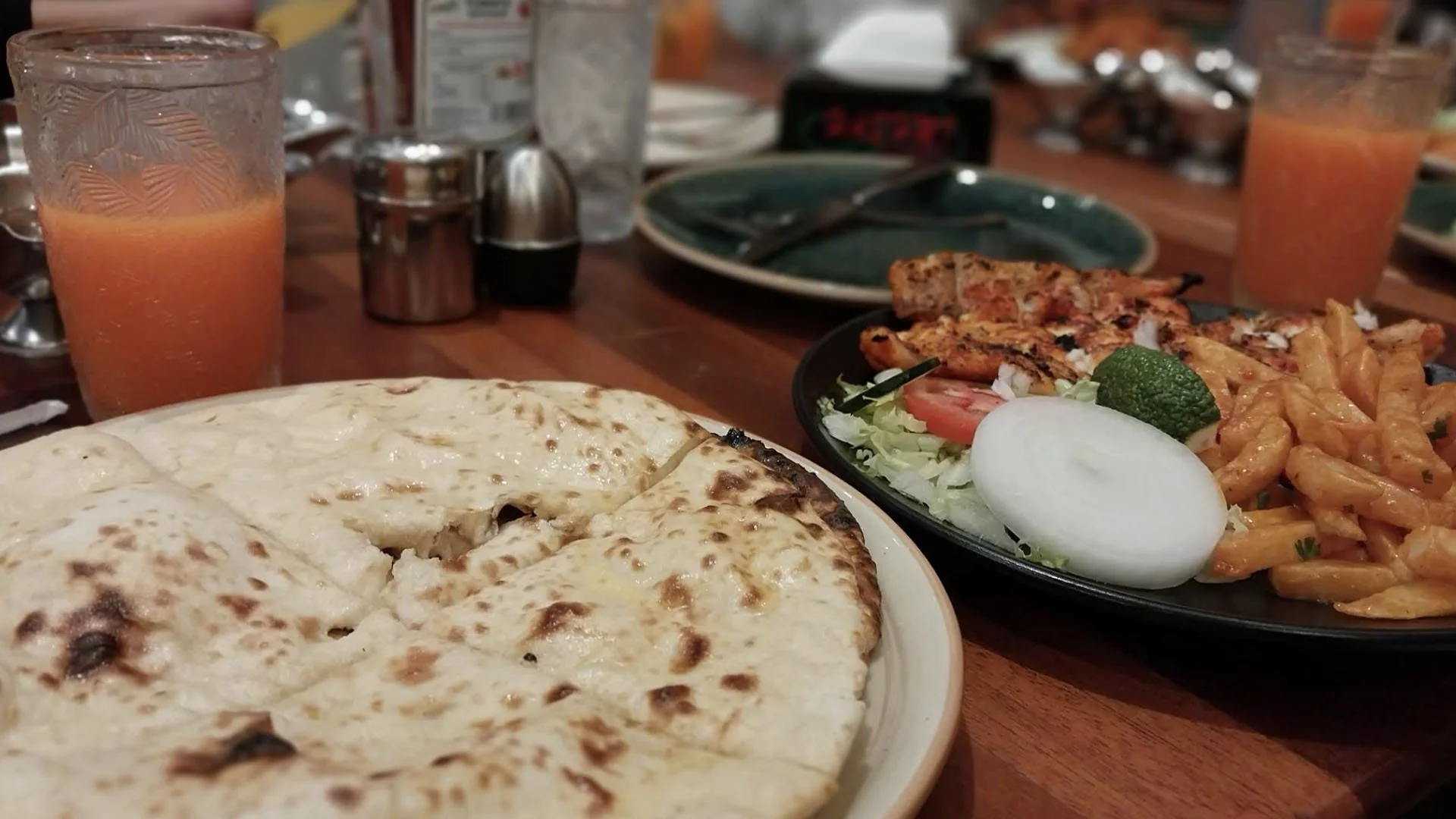
This was a joint that locals fell in love with back when it was at its old location tucked behind a gas station. That usually bodes well, doesn’t it? While the new spot has a more polished ambience, its retained its mastery of grilled meat.
Mishkaki is a cornerstone of Kenyan BBQ. Picture a localized kebab. Skewers of marinated meat that concentrate as much flavor into one bite as the grill master can manage. It’s spiced and grilled, often eaten as street food or bar snack… but here it can stand on its own! If you are looking to pair it with something, the butter naan and chili chips come highly recommended.

Bring an appetite. You definitely don’t want to come here to nibble.
If you’ve ever had a Brazilian Churascarria before, where servers come by with cuts of meat on spears and check the card in front of you to see if you’re ready for more, this is what you’re getting at Carnivore, but Kenyan style.
Steak? Chicken breast? Sausage? Yup. But also… ostrich and crocodile and camel if you so choose. Your only defense against the swords of meat is a little flag they give to use in surrender.
Pro-tip: This place is also the birthplace of Dawa, a cocktail a bit like a gingery caipirinha.

Nairobi’s got a coffee scene, and residents do enjoy camping out in a coffee shop for conversation, caffeine, and computer work. But there’s a turf war.
Java House is the OG. A longtime staple around Nairobi with massive mugs, good coffee, and even burgers.
Artcaffé’s a bit newer on the scene. Hip playlists, European influences, and artisanal pastries.
I have my own opinion as to which is better… but go try both and form your own!
That being said, I will share my own opinion… they’re both good. Artcaffé might have a slight edge in terms of coffee and food, but Java House is tough to unseat as an original. And if you want a more localized experience, that’s the one I’d go for. But do them both.
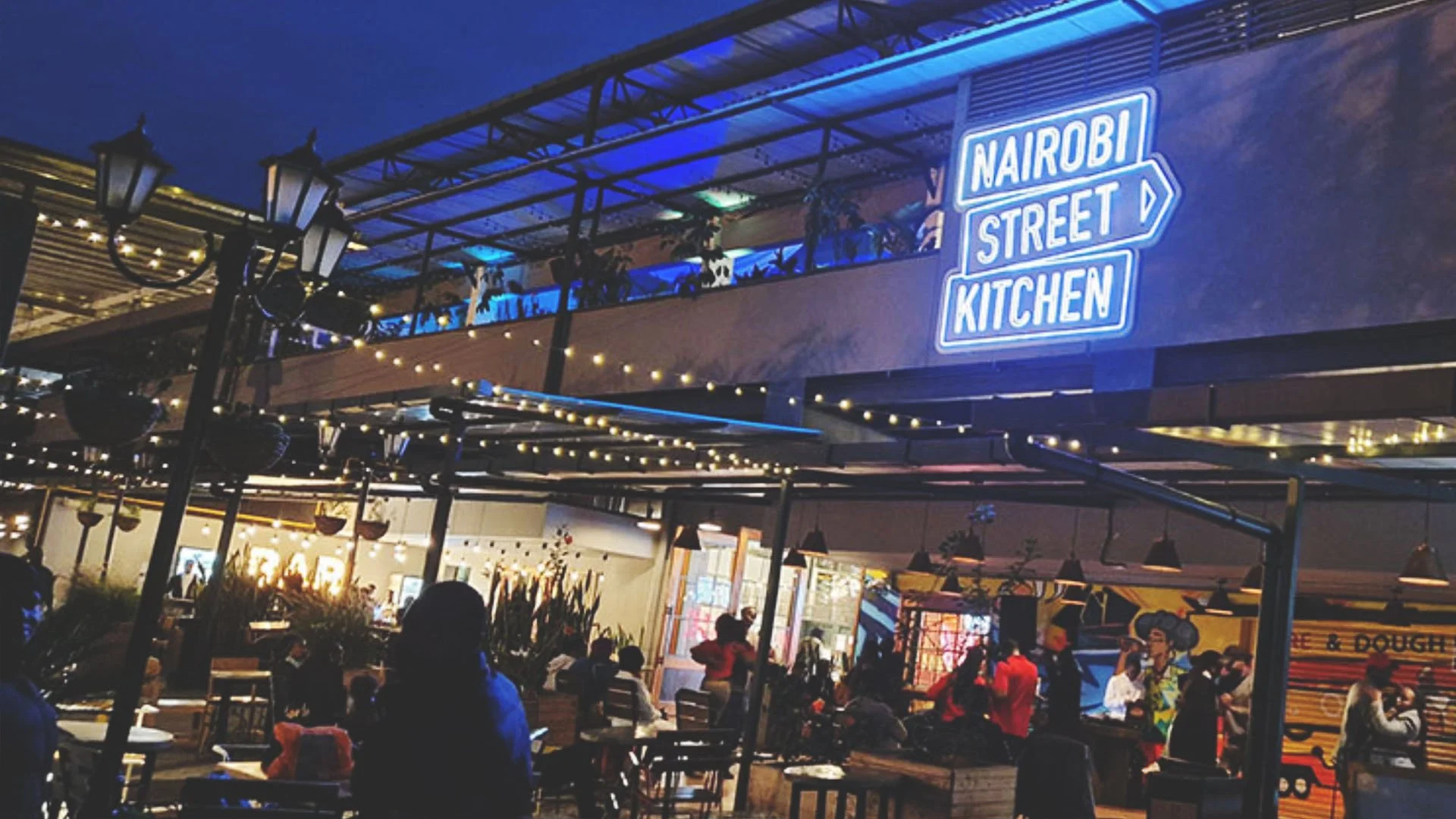
This is Nairobi’s food playground. It’s a bit of a hub of different food booths, so feel free to hop around from one to another. Tacos upstairs, sushi down below, a stray samosa, a snazzy cocktail. I personally loved the adobo chicken wings I had, paired with a Tusker Lager.
While this place is a delicious food paradise, it’s also a very reliable hangout. The outside space offers occasional live music or DJs and numerous lounge type settings so you can linger long after the meal. The inside does include a handful of boutiques and if nothing else, it’s pretty photogenic.

Nikkei cuisine is that very special Peruvian-Japanese fusion where the boldness of wasabi and lime blend into each other. Altitude-affected sushi. Ceviche made with mastery. While the bulk of noteworthy Nikkei eats would of course be found in Lima, Nairobi’s INTI not a bad place to find it on the opposite side of the world.
The artsy plates pair well with their creative and elegant cocktails. It’s a popular date night in the Westlands neighborhood, where you can impress your partner with unique dishes hard to find elsewhere. Catch the sunset over a a plate of tiradito.
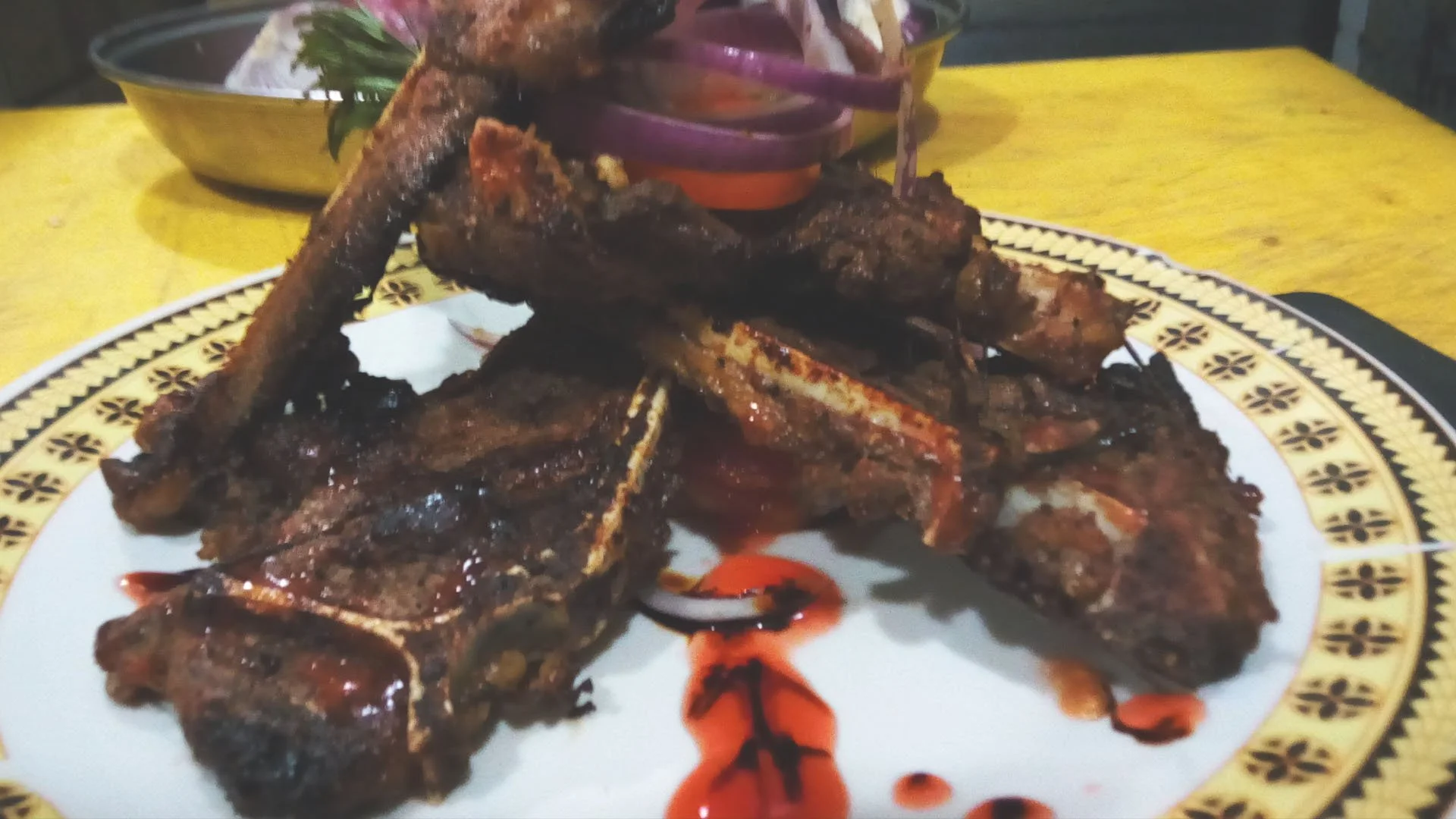
While Kenya has several distinct, must-try dishes, I suppose nyama choma has the strongest case for being the national dish. It typically consists of char-grilled goat, beef, or chicken, grilled all smoky and primal, plus ugali (maize porridge). If you want to act natural, pinch the ugali and use it to rip off a chunk of meat or the kachumbari tomato-onion salad it’s usually paired with.
Roadhouse Grill–no relation to the American chain that you might remember from the 90s or 2000s–is a simple, loud, casual spot that doesn’t let anything distract from the eating experience in front of you. Prices are friendly and the portions are generous.

I went to kesh kesh to work. I heard it was a decent coffee shop with wi-fi where I could pull-up a laptop, and while that was technically true, I was surprised to see that it was also a full on burger joint AND an Ethiopian restaurant.
The burger and beer I ordered was solid, and from what I could see, the Ethiopian options were also great. It’s nice having a neighboring country that has its own excellent cuisine. I felt like having a massive disc of injera and my laptop out would’ve been asking too much of my tabletop, but this place is a mashup that shouldn’t work, but absolutely does. It’s chill, it’s soulful, and you’ll probably leave with both a caffeine buzz and a full belly.

I already put you on to the Java House vs Artcaffé rivalry, but those are large entities. Local icons, but chains, nonetheless. You’ll probably want to mix something that’s a bit more of a one-of-one, and that would be Sigiria Coffee House. This is a place to come and romanticize your morning cup a little bit.
This is actually tucked beside the trails at the entry of Karura Forest, and it’ll feel like an escape from the city without having to actually leave. You’ll get a good tree cover, plenty of green space, and even the occasional stare from a monkey.

The Swahili Coast of East Africa has its own distinctive regional cuisine, influenced by cloves, coconuts, and historic trading routes to the Indo-Malay strait. While Nairobi is inland and up high, Swahili Plate can serve as an ambassador of the coast.
It’s downtown location is humble in appearance, but its food just might make you wish you had a Swahili grandmother that introduced you to this cuisine much earlier in life. (If you actually have a Swahili grandma… lucky you!) Enjoy the pilau, the samaki wa kupaka, and the spices. Wear something loose and indulge in the coconut sauce.

Okay, if we’re trying to be efficient, you could get the Swahili Biryani at Swahili Plate, where it is excellent. But we’re not going for efficiency. We’re going for experience. So consider the bonus journey over to Hash Grill a treat.
Many parts of the world are familiar with biryani, beloved mountain of rice that it is. But Swahili Biryani comes with its own twist. You’ll have the classic fragrant rice and tender meats, but the spice blend comes inspired by coastal hubs like Mombasa or Lamu. If you ever find yourself in a conversation with Indians, Pakistanis, and Bangaldeshis over who has the best biryani, you just might find a new contender has entered the arena.

Don’t think I could make it through this list without a proper street food experience. The food court of the Sarit Center is a snacking mecca. My top picks are the smocha - a smoky sausage roll wrapped in a chapati, and the mayai pausa, which are sliced boiled eggs stuffed with kachumbari. These are cheap, quick, and nostalgic bites meant to hold over an appetite in between errands, but they’re such a core part of the Nairobi experience that you can’t leave them off the list.

When you’re spending time in a new place, not every meal is going to be a big old indulgence. Gotta keep a spot open for the casual stuff. And that’s what you’ll find at Birdy’s. Chicken sandwiches, wings burgers, and maybe even a milkshake. But it’s nice when casual eats like this still feel distinctly Kenyan, and options like their half-poussin chicken with samosas, masala chips, and coconut beans and rice help accomplish that.
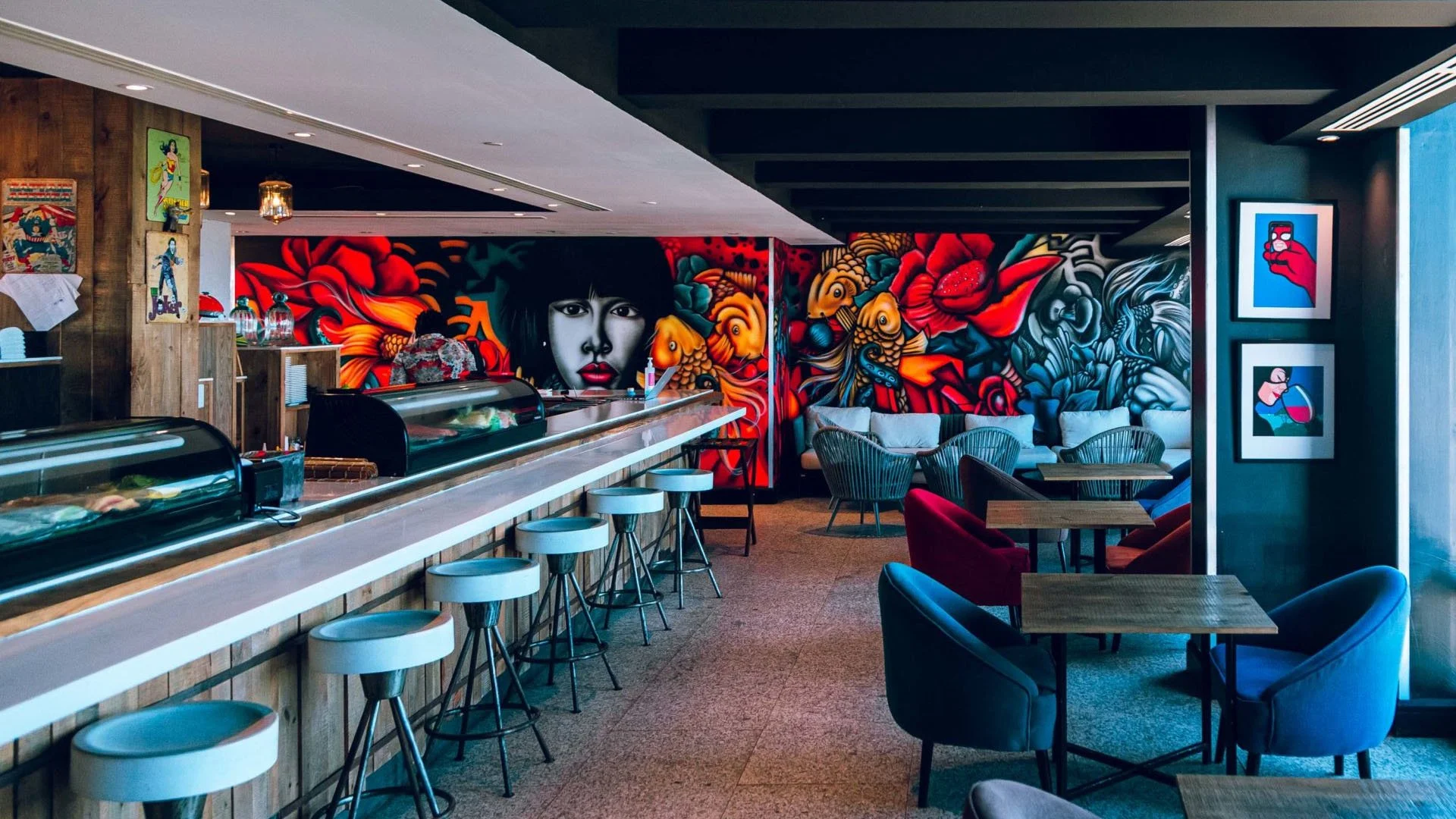
Ever want to sip cocktails among comic book panels and neon lights while staring at the Nairobi skyline? Probably not, because unless you’ve been here or you’re local, you might not have known that was an option. But it is, and it’s a stunner.
The drinks are themed, the decor comes emblazoned with various superhero icons, and even the bathrooms play along with the theme. It’s not all just aesthetics. Their tapas are legitimately good.

Have you heard that adage about every culture’s cuisine having some sort of doughnut? Well, Kenya’s definitely got one, and it’s mandazi. Fried pillows of dough.
Swahili doughnuts are perhaps a bit like a mochi doughnut. Slightly sweet, chewy, and light. They’re great paired with chai… something Nairobi also does really well. Mandazi are a humble treat with cult status. Affordable, nostalgic, and always freshly made. They’re Nairobi’s version of comfort food therapy.

I’ve heard several Kenyans cite tilapia as their favorite local dish, and while it can be prepared several ways, having it fried up is probably tops. Crispy on the outside, juicy on the inside, you know the drill
Served with ugali and sukuma wiki, this is Kenyan dining at its most iconic. And if some high-profile eaters can help convince you, know that Barack Obama and Anthony Bourdain have made this pilgrimage.
One of my favorite things about Nairobi is how well it serves as a gateway to the continent. A well-connected airport, some neighbors worth visiting, and relative stability all help with that. But if you’re not able to make it to a bunch of other African nations in one trip, at least your palette can.
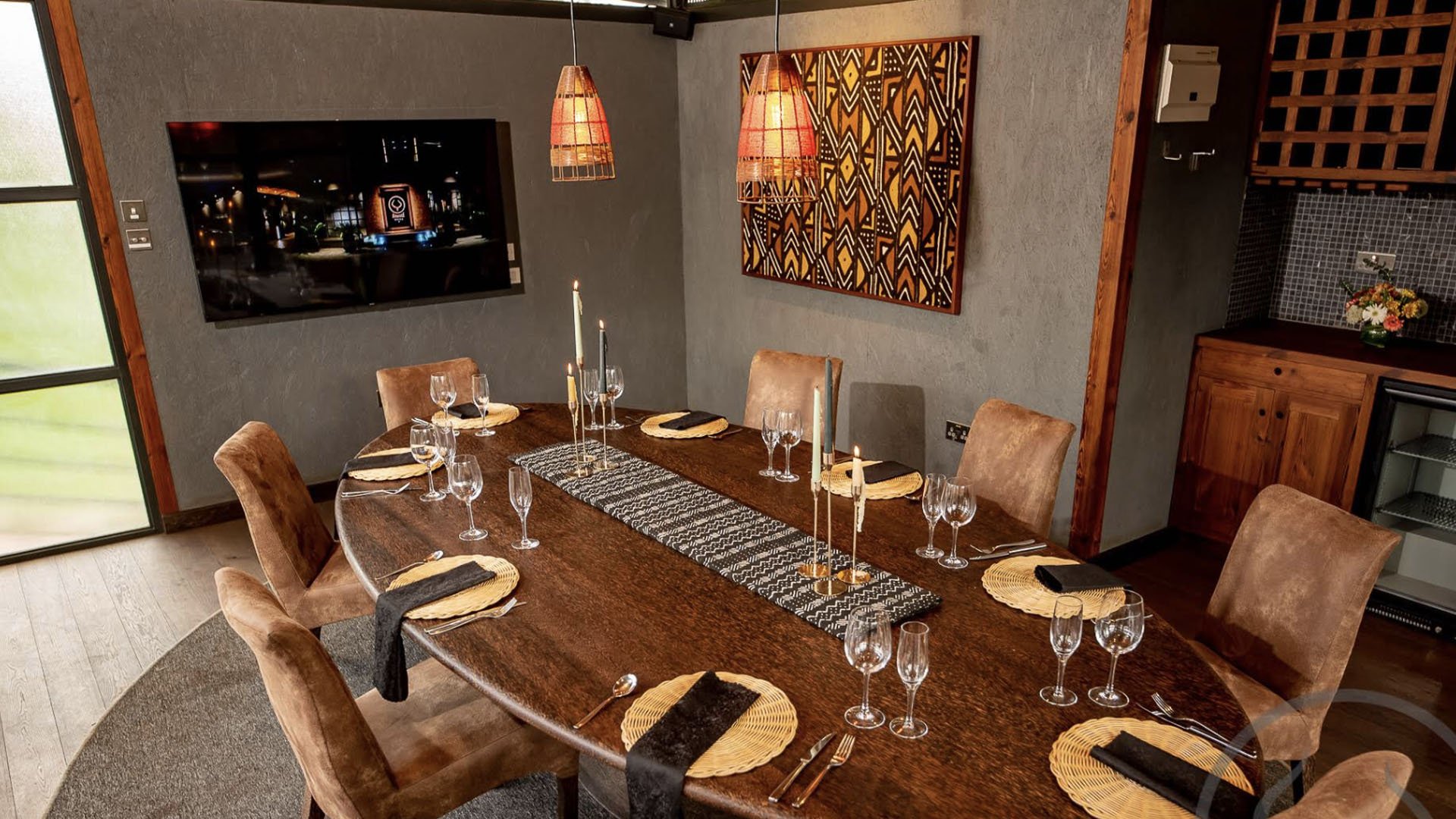
At Ankole Grill you’ll find West African jollof, East African ribs, and all kinds of grilled glory in between. The ambiance is sleek but rooted, with décor and dishes that tell a story. Also, their chapati might ruin you for all others.
Whether you’re interested in the spices of Swahili coastal cuisine or bringing the appetite to a smoky barbecue joint, I can’t say enough good things about the plethora of options you’ll find in Nairobi.
Plan well! Your taste buds will thank you as you make your way around this vibrant African hub.

“If you consistently do the little things, there’s no limit to what you can achieve. Look at me, I’m 5-11 and 170 pounds. When I came to America, many people said I was too skinny to compete with bigger major-leaguers. The first time I ran out on the field, I was in awe of the competition, but I knew if I stuck to my beliefs about preparation, I could overcome the doubts, even my own.”
–Ichiro Suzuki
Over 90% of Kenya’s electricity comes from renewable resources. It also increased household electricity access from around 27% in 2013 to over 75% by 2023, with most of those gains in rural areas.
This makes Kenya one of the few countries in the world to massively expand electrification without increasing reliance on fossil fuels.
I recently came back home after a couple weeks on a big adventure out of the country. My favorite thing these days is when I get to see the kids again after being away for a little bit. Nothing like the colorful greetings that usually wait on the other side of my front door.
The next few days were part of a long weekend, which was especially welcome. I spent most of it deeply enjoying very ordinary things. Spending time with the kids in the pool. Restocking on groceries. Planning the week ahead on a spreadsheet. It was quite the contrast with the waterfall hikes and cave exploring I was up to earlier in the week, but I was loving it.

Re-entry after a big adventure used to feel more disorienting. I see these memes of people trying to recreate their European getaways by sitting outside of a coffee shop in an American suburb, only to find congested parking lots and scattered shopping carts in the background. That’s what coming back home used to feel like. The bigger the adventure, the bigger the come-down afterwards. Womp womp.
Coming home doesn’t feel like such a letdown anymore.
Some of it is acclimation. I’ve gone on enough adventures to understand that another one will come soon enough, and being home is a good chance to catch up on life until then.
But also, I’ve come to appreciate the ordinary side of my life a whole lot more. Dare I call it… the boring side.
I used to hate the idea of life being boring. The word didn’t feel strong enough to describe the emptiness of life without meaningful pursuits or a sense of purpose. And so I wanted to make sure my life was the opposite of boring.
Last year, though, I heard the term boring used in the most positive way I’ve ever heard.
I lost a family member to cancer, and at his memorial service, his wife shared that their marriage was “boring in the best way possible!” By this, she meant it was free of drama, steady, and always felt like a comforting and familiar sense of home.
As my own home life has taken off in the past few years, with three young kids, I’ve come to value balance a whole lot more. I’ll probably always have an appetite for adventure and wanderlust, but I’ve also started to value pairing that with an appreciation for the ordinary.
I devoured books and blogs written by people who did exactly that. A guy who gave up his career to ride his bike around the coastline of Africa. A guy who came up with a pretty good method to rapidly learn languages to travel around the world. Young people who left stable jobs to launch nonprofits in war zones.
And I always figured I’d end up doing something similar.
I went to a bunch of conferences that offered a closer look at how to overcome the things that usually get in the way of such a life. The necessity of money. The expectations of others. The trap of comfort.
Inspiring stuff!

From my vantage point, life throws you curveballs. Different people face different challenges in life, things that make their life “different than how it’s supposed to be.” For some it’s a diagnosis, for others it’s an early loss. All kinds of things. It makes you realize that there is no “normal” way to experience life.
If that’s gonna be the case, might as well try and make it “abnormal” in a positive way.
I started making some unconventional choices. Like:
Opting to couch surf my way through a semester of school instead of renting a place.
Taking on an odd internship of living in a van and speaking about North Korean human rights immediately after graduating.
Not waiting too long to start traveling with my kids, and taking them to Guatemala, the Philippines, and Portugal as toddlers.
And you know what? These ended up being great decisions!
During that semester of couch-surfing, I wound up becoming good friends with a girl who I’ve now been married to for ten years.
That odd internship gave me a taste for working in the nonprofit world and set the bar high. I’ve been working at nonprofits with a similar culture and heart for over a decade, loving what I do.
While traveling with babies wasn’t easy, traveling with my kids is relatively easy now thanks to their early experience. My five year old recently told me he wants to do an escape room in every country in the world, and so I love that a sense of adventure has been stoked. (If you know of any good escape rooms in Angola, help the kid out!)
All that to say, I value unconventional living. I think it’s good to question norms and expectations around how life is supposed to go.
But when doing things differently becomes your new normal, then question that too.
I have several bookmarked experiences where you can spend a night with a local family in a yurt in Mongolia, a Berber home in Mauritania, and so on. And I’ve already had plenty of opportunities to visit and spend time with people in rural villages, experiencing their daily activities.
While these are adventurous experiences to me, they represent people’s ordinary lives! To the Bangladeshi bricklayers I got to interview, they were just there for another day at work. The only weird thing was this guy from California who came by to chat in the middle of it.
It’s easy to romanticize ordinary when it isn’t your ordinary, but that just means that your ordinary is also fascinating to somebody else.

One thing that’ll quickly make you realize how good your ordinary life is are those times where you have it taken away from you.
I’ve had to endure a couple of health crises with my family, and while things resolved in a way I’m grateful for, those moments were full of so much uncertainty. Having to take care of kids on top of that makes it both physically and emotionally draining. You start to long for a simple day of being able to drop people off at school, go to work, and make dinner without worrying about test results.
Okay, skip ahead if you don’t want spoilers here, but Soul’s been out for years! Anyways.
By the end of the movie, Joe navigates a near-death experience to play his dream gig of accompanying a legendary jazz singer. However, in the quiet come-down after the experience, he realizes he was living along, through simple acts as he went about his day. He realizes that his “spark” of life wasn’t for this one special purpose of playing music, but the joy of living.
I loved that ending. Your passion, your pursuit, doesn’t have to be your purpose.
Just after college, I would alternate between stints of backpacking around the world and working odd jobs to afford those adventures. One of those odd jobs was being a substitute teacher, and I remember having to guide a class through an exercise in telling personal stories of things they experienced.
I realized that most stories I had from the previous summer spent in Europe might not relate to them too well. They might also come across as showy and unnecessary, so instead I told a story of trying to make a better grilled cheese. Pursuits often lead us to connect deeply with those we meet along the way, but it’s also good to note when they might actually create separation.
In the end, I think there’s still something wise in living outside the script of expectations. It’s a good thing to question what often gets taken for granted as the next logical step.
Whenever you face questions like:
What will I do after graduating?
What should we do with the kids when I go back to work?
How can I afford the trip of my dreams?
It helps to consider that the most ideal approach often isn’t the obvious one. Starting from a standpoint of openness to look at these crossroads from a whole bunch of different angles often leads you to doing things you end up really grateful for down the road. It’s been that way for me.
I think in the long run, I’ll still always have a natural inclination towards unconventional living, ambitious pursuits, and an eclectic mix of things I pursue. Much of this is just baked into the way I’m wired, and I appreciate that when you live this way, you wind up with good stories to tell.
But I’m also grateful that recent years have helped me better realize the value of the ordinary in-betweens. In the end, both ends of the spectrum are important. They both matter. You can miss out on life by living in a cocoon of familiarity, repetition, and routine, but you can also miss out on a large chunk by thinking that only the highlight reel is important. You really do need both ends.
I think the key to a richer life isn’t to have a more eccentric life. It’s to have a more deeply examined life.
When you question life’s norms and expectations, that’s one valuable examination. You often discover that a lot of the things we think of as necessary actually aren’t.
But when you keep examining, you might also start to discover that there’s a lot of good in life’s simpler corners. That fully embracing the ordinary days also makes a lot of sense. That these two opposites make each other more special.
Ordinary days can be amazing.


There’s probably some alternate timeline where I lived out my entire childhood in Philly, and maybe even stuck around after that. I love Philly, and it’s easy to get curious about what that would’ve been like. It’s an impossible hypothetical, though.
I love the life that unfolded in California and the people I get to share it with.
It’s like the movie Past Lives, minus the preschool playmate who becomes a lifelong what-if.
“It’s true that if you leave, you lose things. But you also gain things, too.”
I don’t easily embrace limitations, but part of getting older and growing creatively lets you see limits as a catalyst for something good.

You cannot separate the earth from the people who live on it.
Love the stories that come to me from our Plant With Purpose teams around the world. Our Burundi team sent me Juvenal’s a couple weeks ago and I had to spin off a little sketch.
“I felt happy when I heard about the three integrated components: economic, environmental, and spiritual. It wasn’t just about money or farming. It was about the whole person. One of the lessons was about forgiveness. I realized that forgiveness surpasses all. It’s bitter at first, but the fruit is delicious.”
I appreciate that bucket lists remind us that we won’t be around forever, and a little memento mori does a person good! But, the flip side is that they often make us think of the important things in life as the highlight reel, when in reality the small bits matter just as much.
That’s why whenever I do a bucket list type of thing, afterwards I focus on actually savoring the most mundane tasks and ordinary things.
New Zealand has been at the top of my list for ages, so I wanted the moment I actually made it over to be a big one. Like… a ten-year-anniversary and first-trip-without-the-kids big.
Releasing the files!
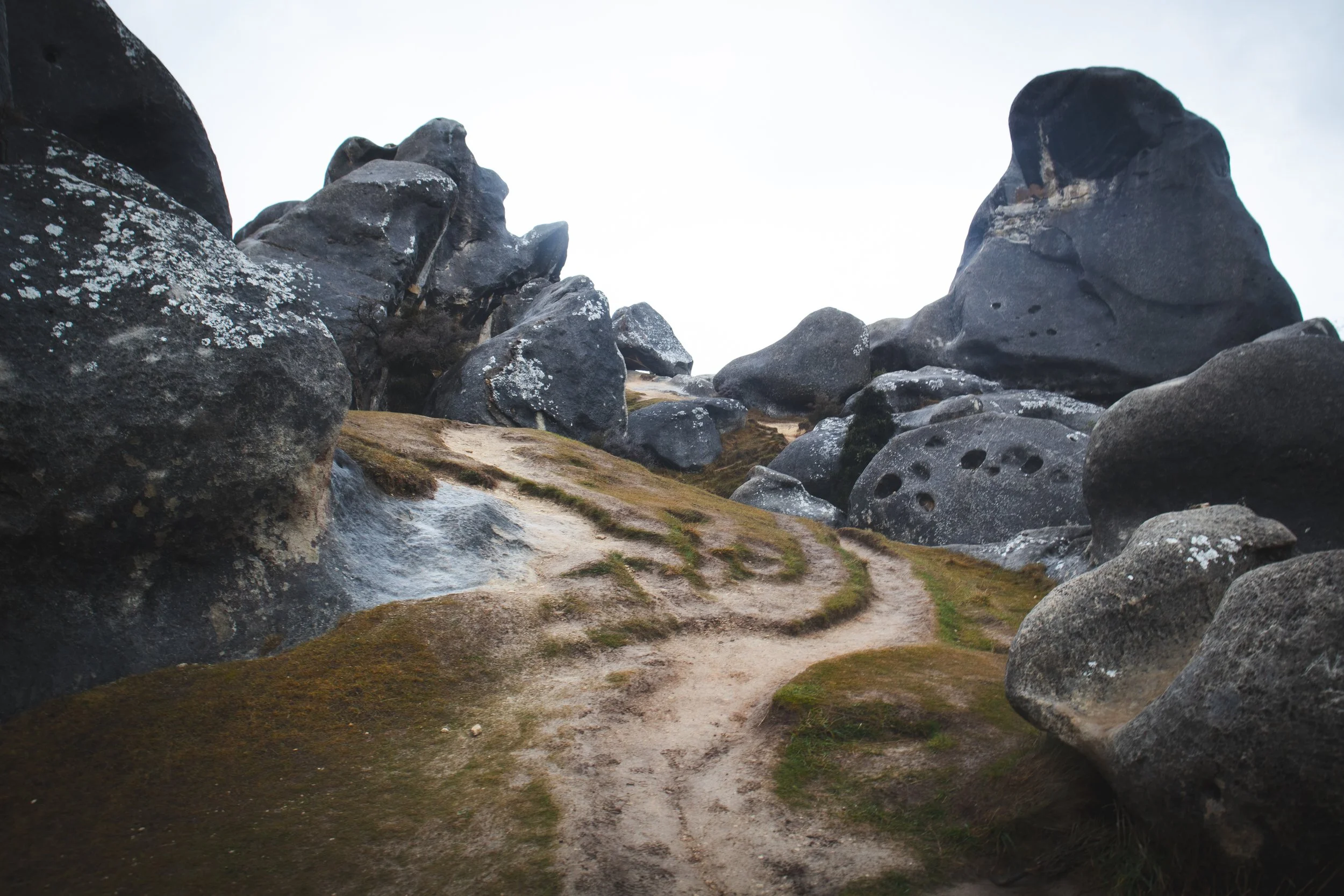
Big rocks… also the battlefield set from the Narnia movie
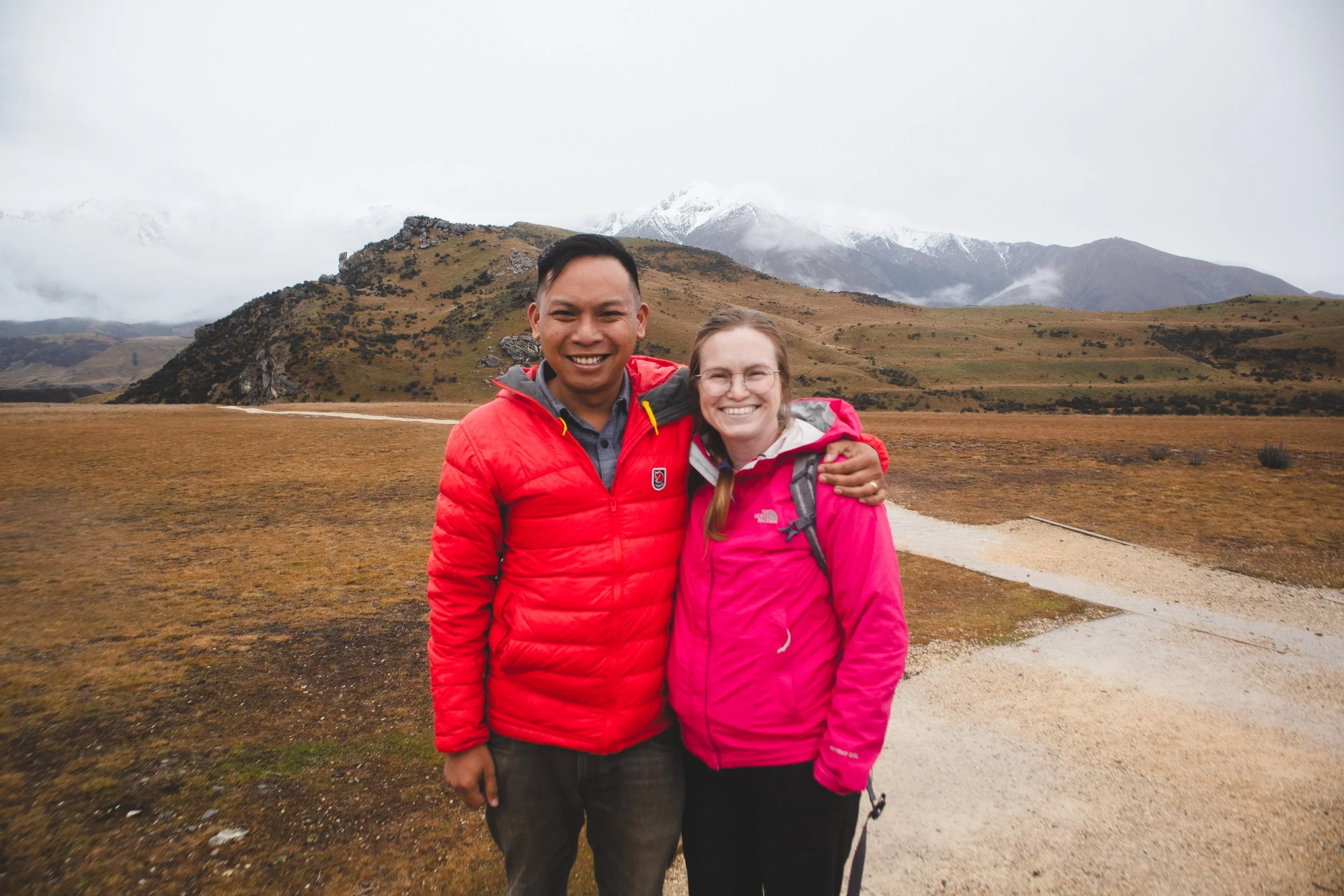
Arthur’s Pass on the Day of our anniversary
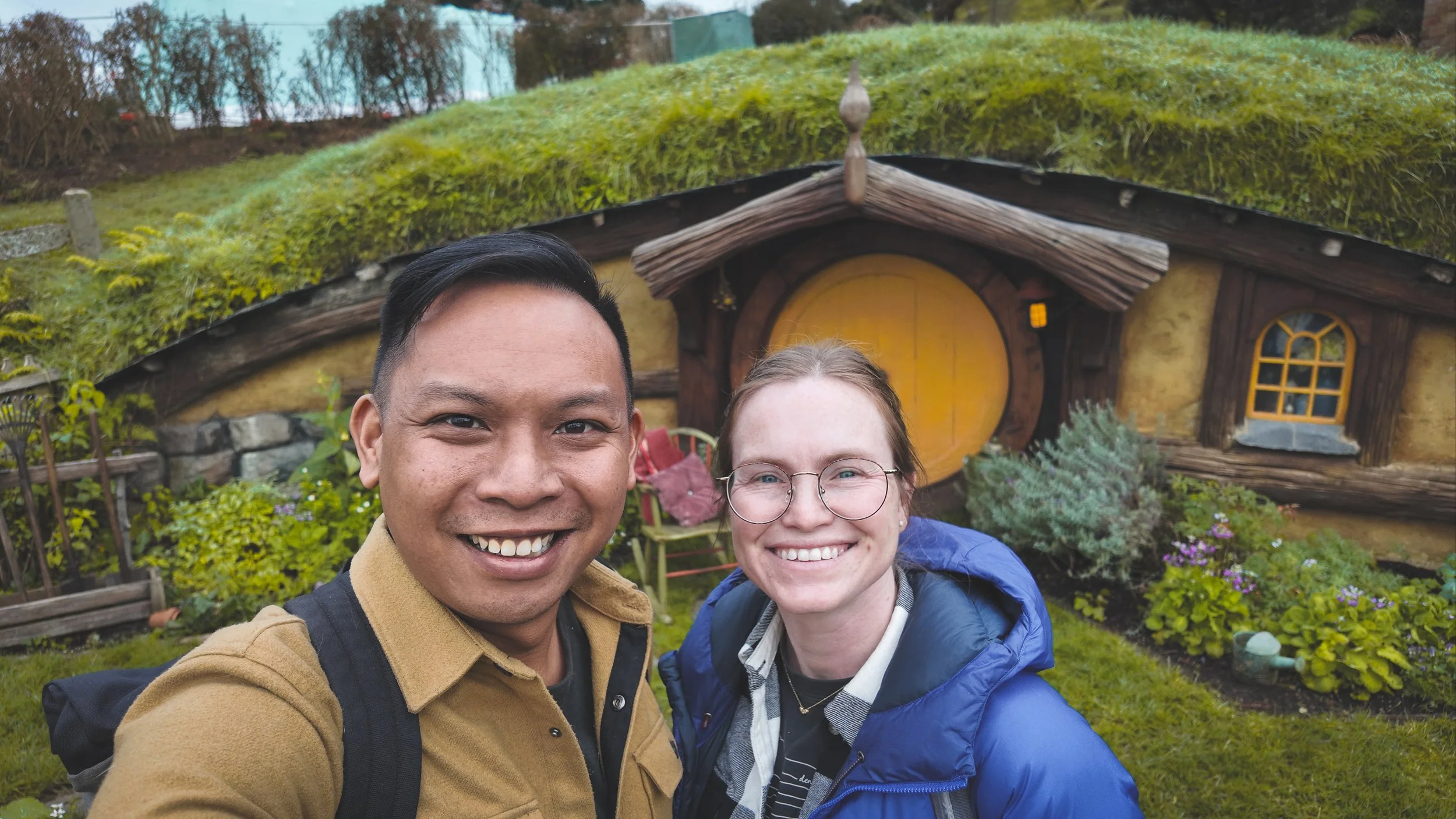
House of Gamgee
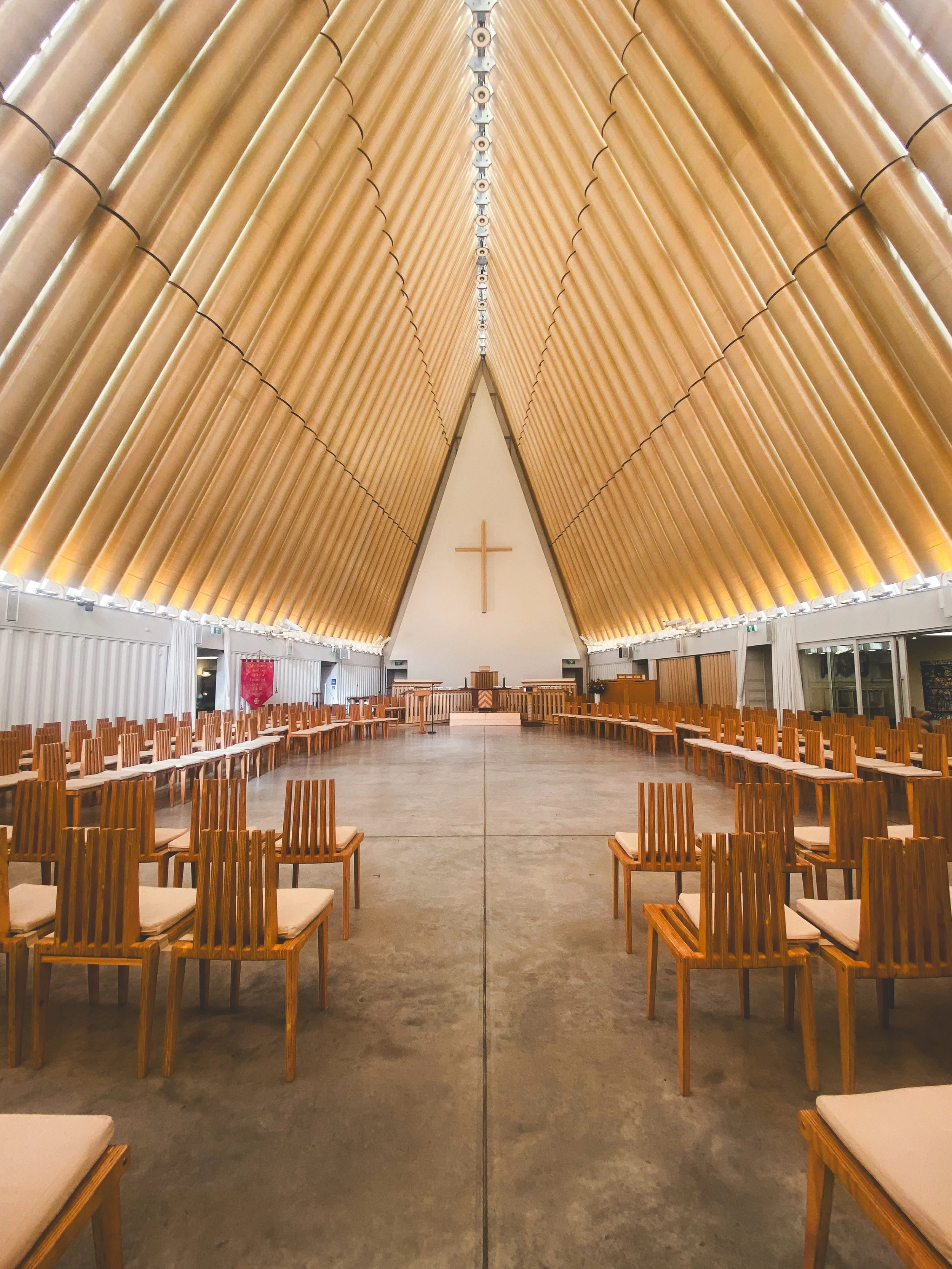
Christchurch’s “Cardboard Cathedral” made after the 2011 Earthquake
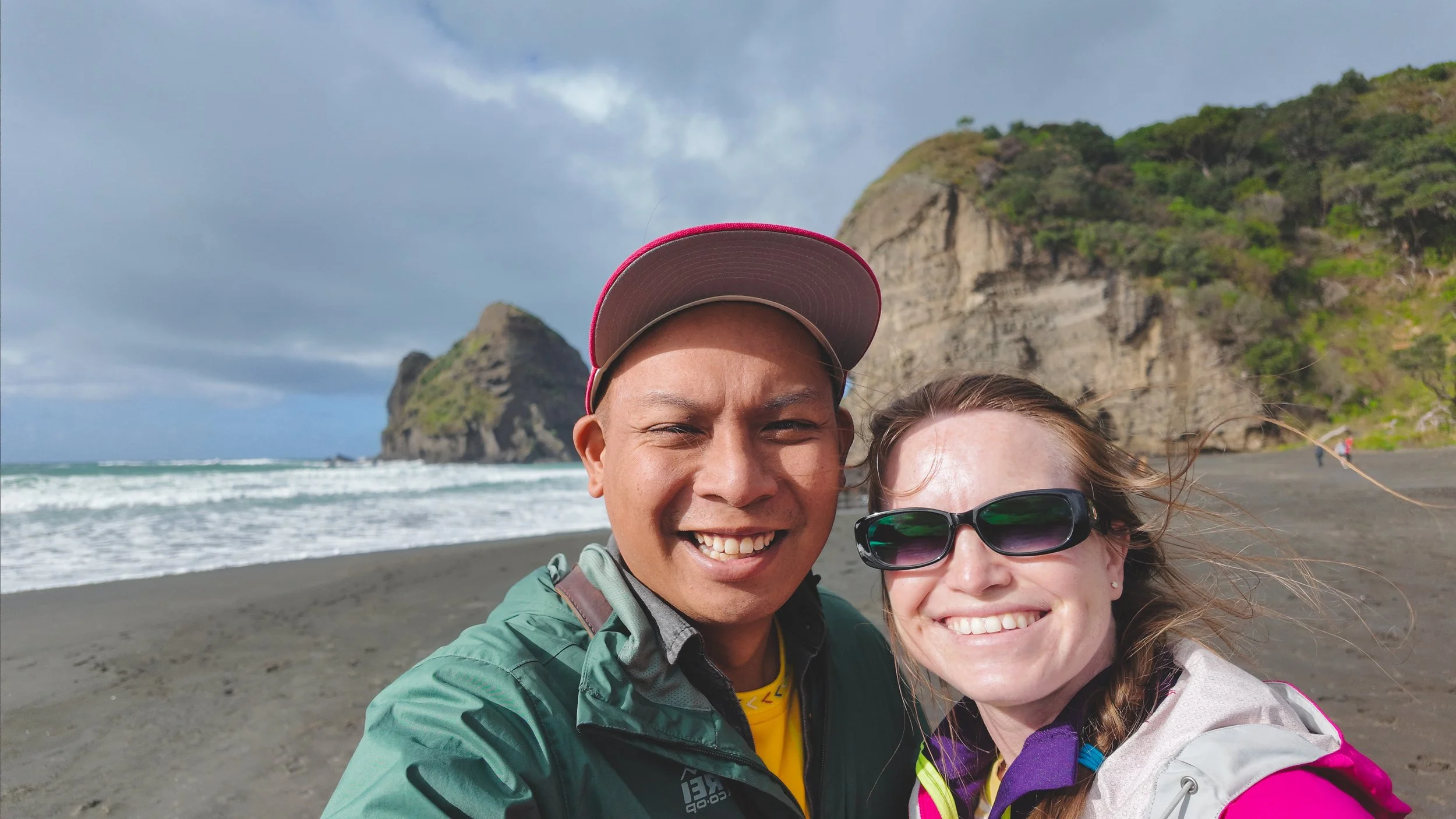
Piha Beach… beautiful, but windy as

Within a few hours of arriving in Auckland, Deanna led us to the cemetery
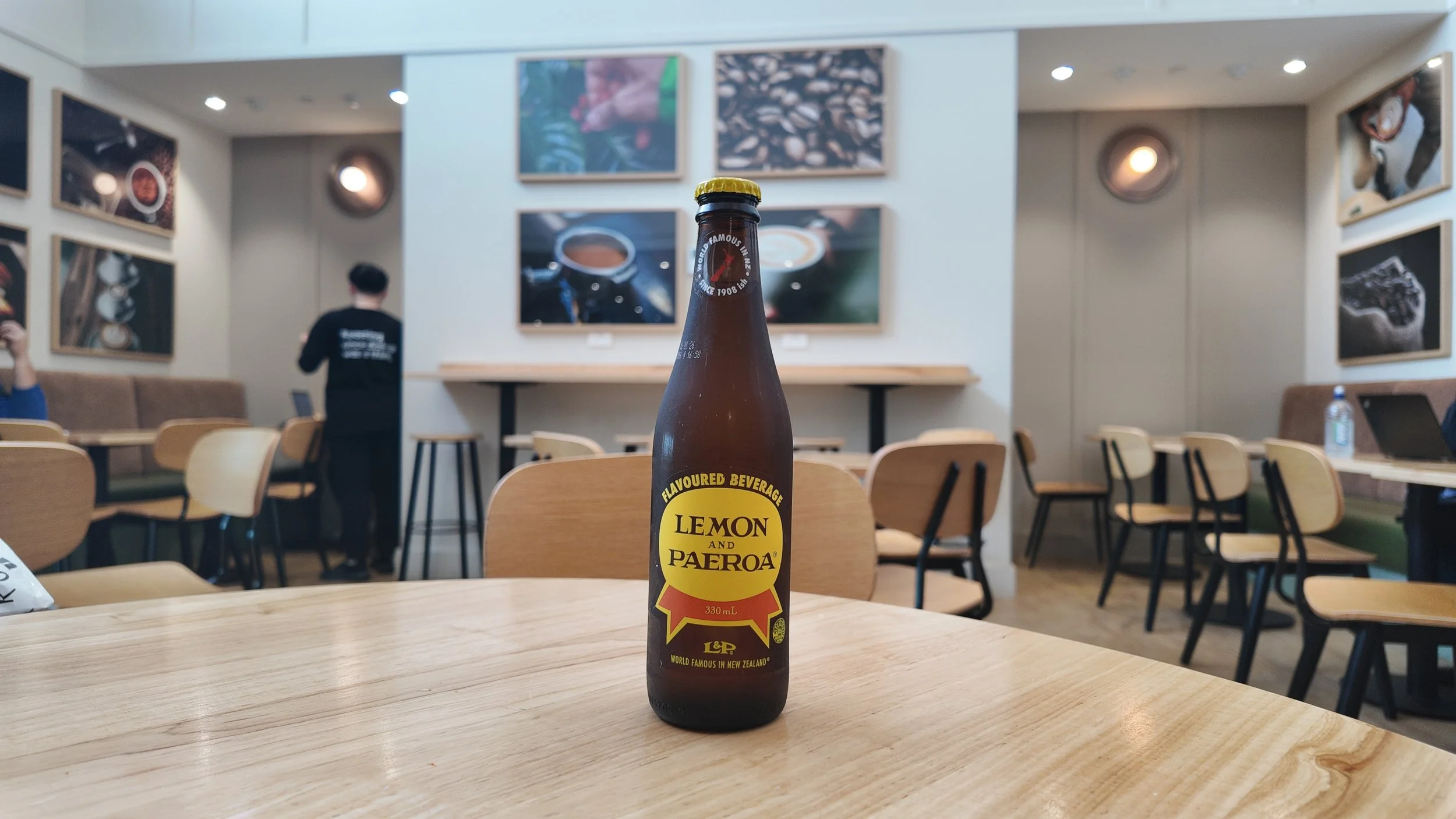
Another round of L&P
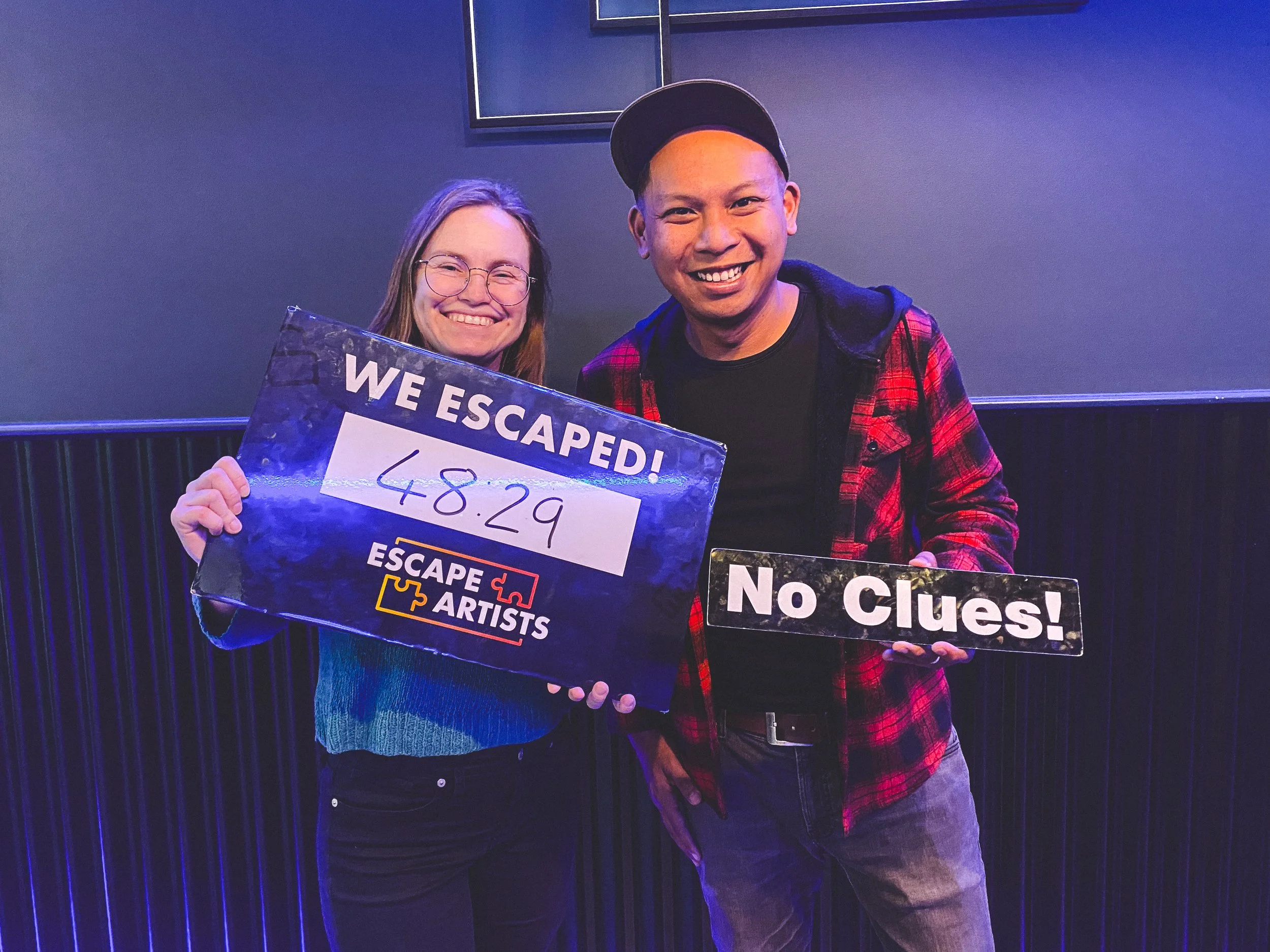
Rhys has told us he wants to do an escape room in every country of the world, so in his honor, we escaped in Christchurch

Breakfast at Cordis in Auckland… in my top three breakfasts of all time, for sure

Sippin’ on gin and another flavor of gin
I underestimated how much I would enjoy the food in New Zealand, kinda shrugged at its cuisine being known for burgers and fish and chips.But New Zealand has an incredible international food scene.I could’ve eaten two dinners a night with the Riverside Market in Christchurch making it such a tough decision to pick a spot.
Some faves:
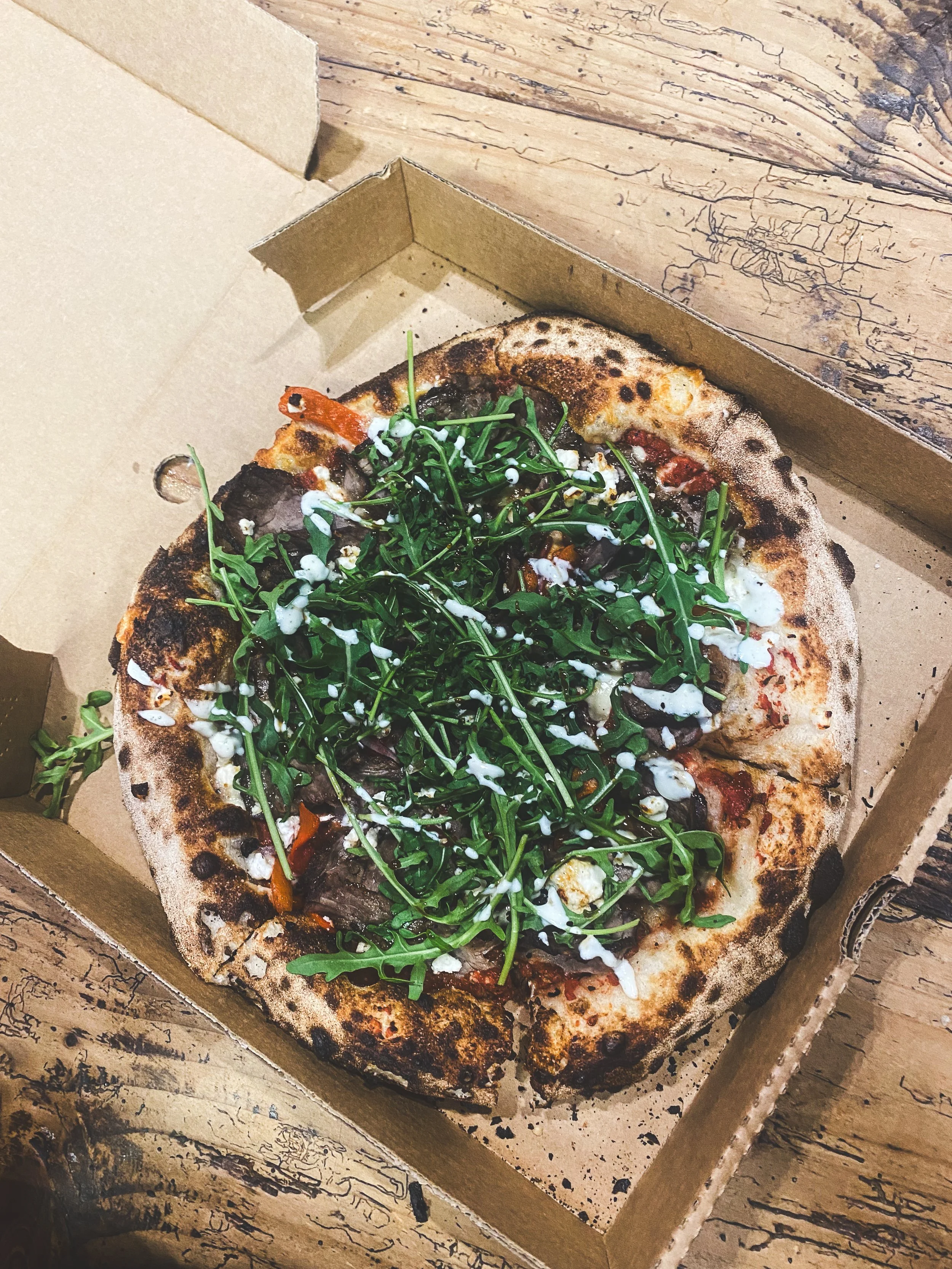
🇲🇦 Lamb, mint, & rocket pizza
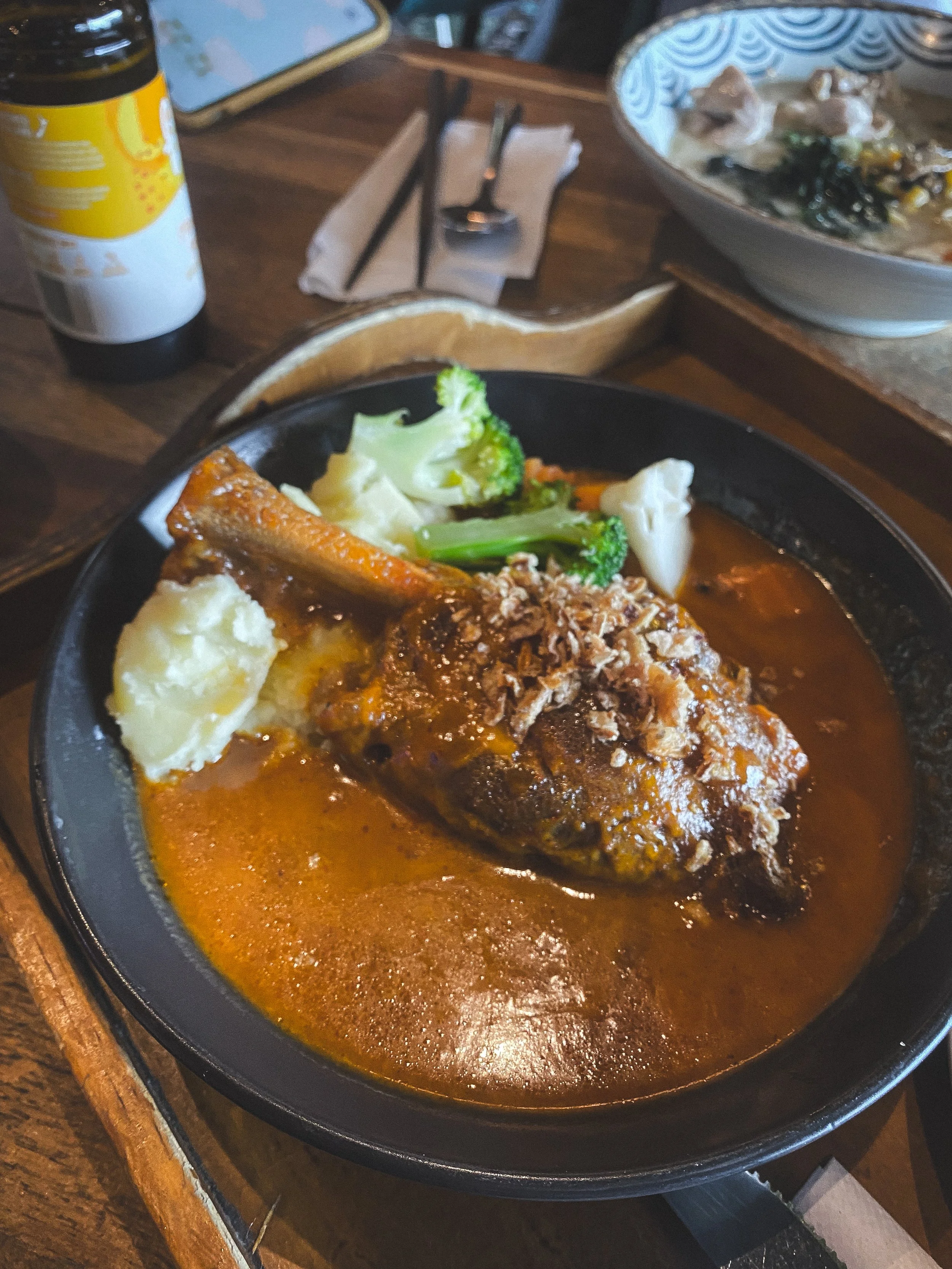
🇹🇭 Lamb shank in massaman curry
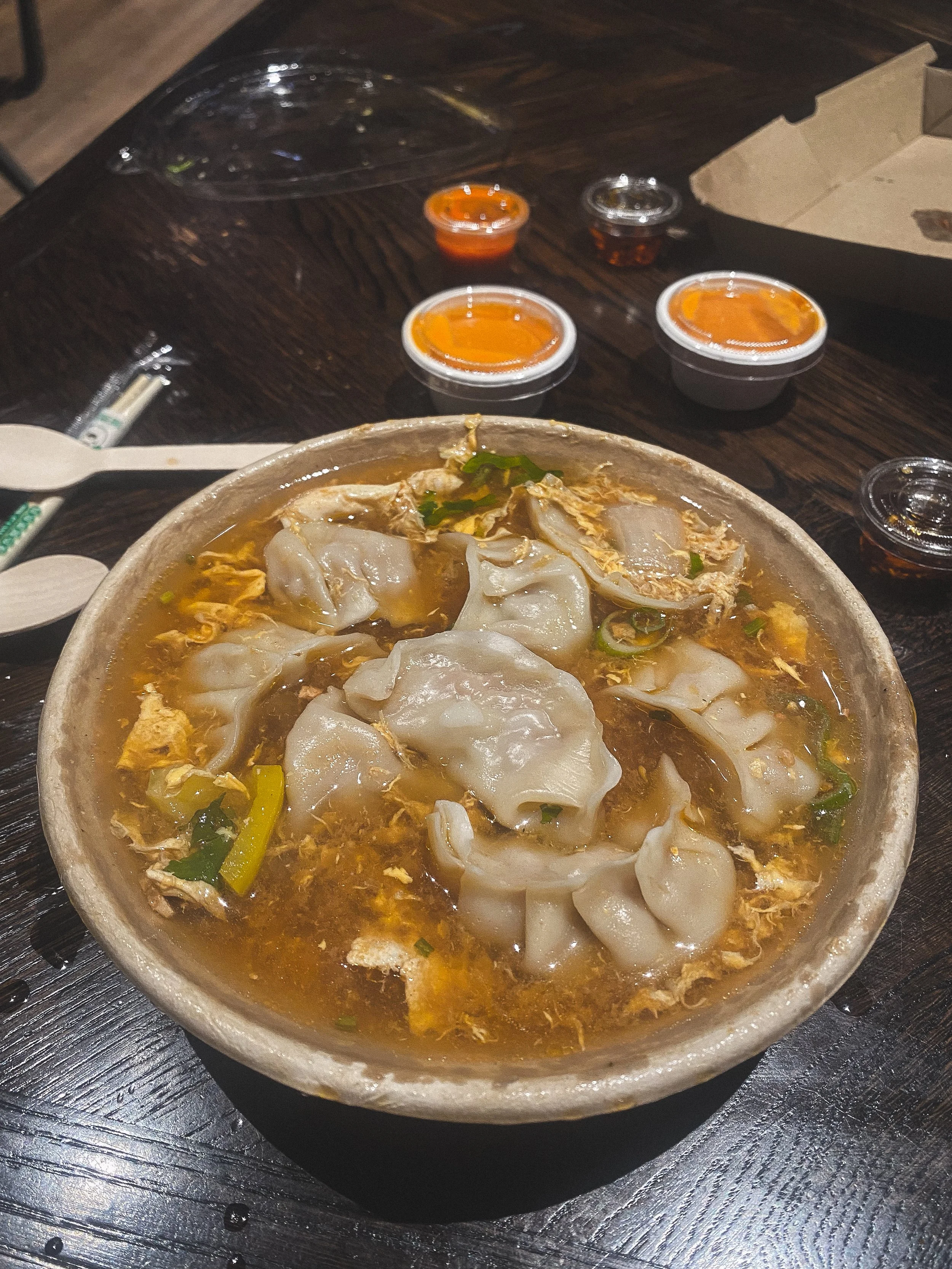
🇳🇵Spicy & sour momo soup
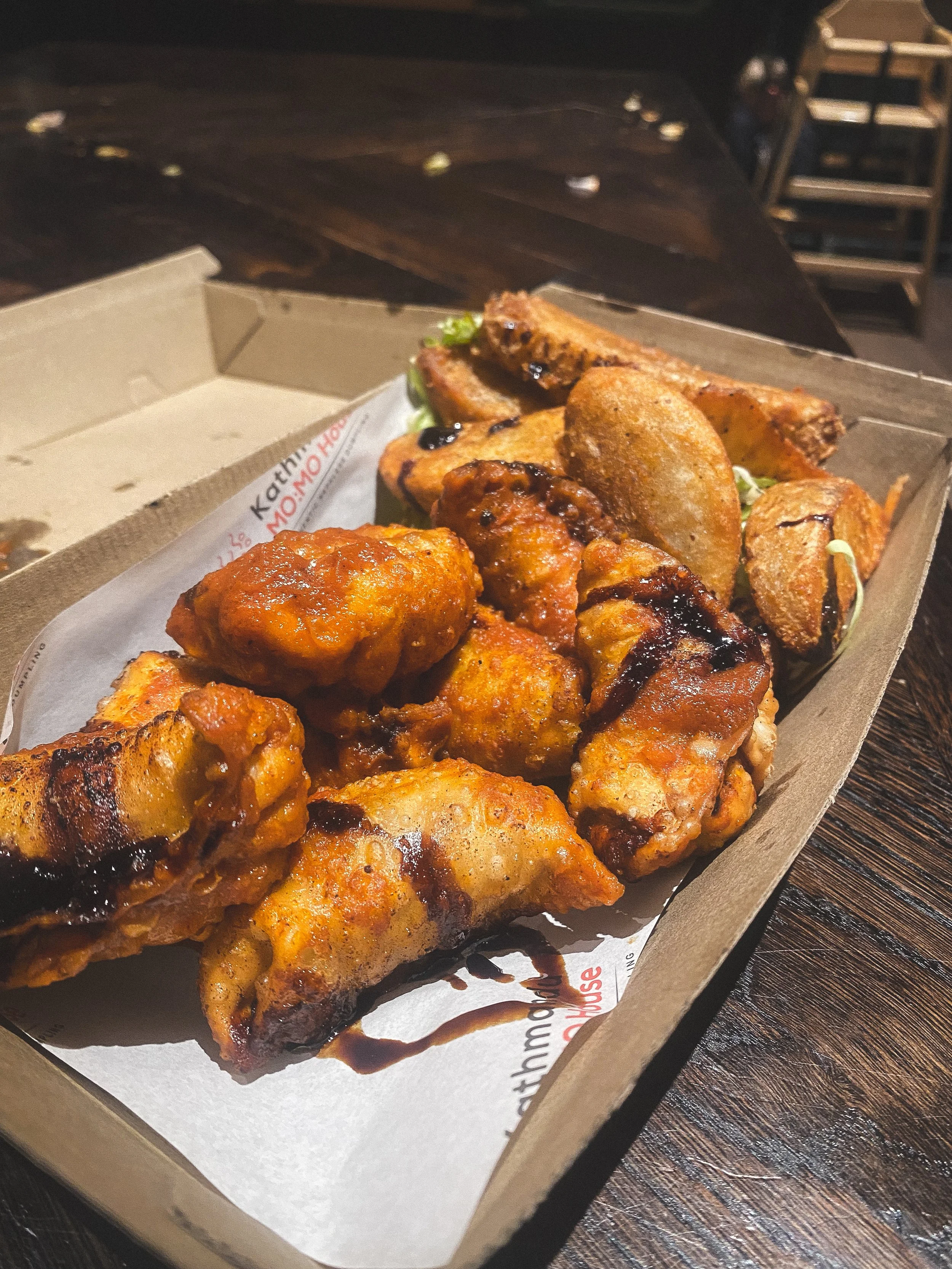
🇳🇵Fried momo

🇦🇷 Morcilla & chips
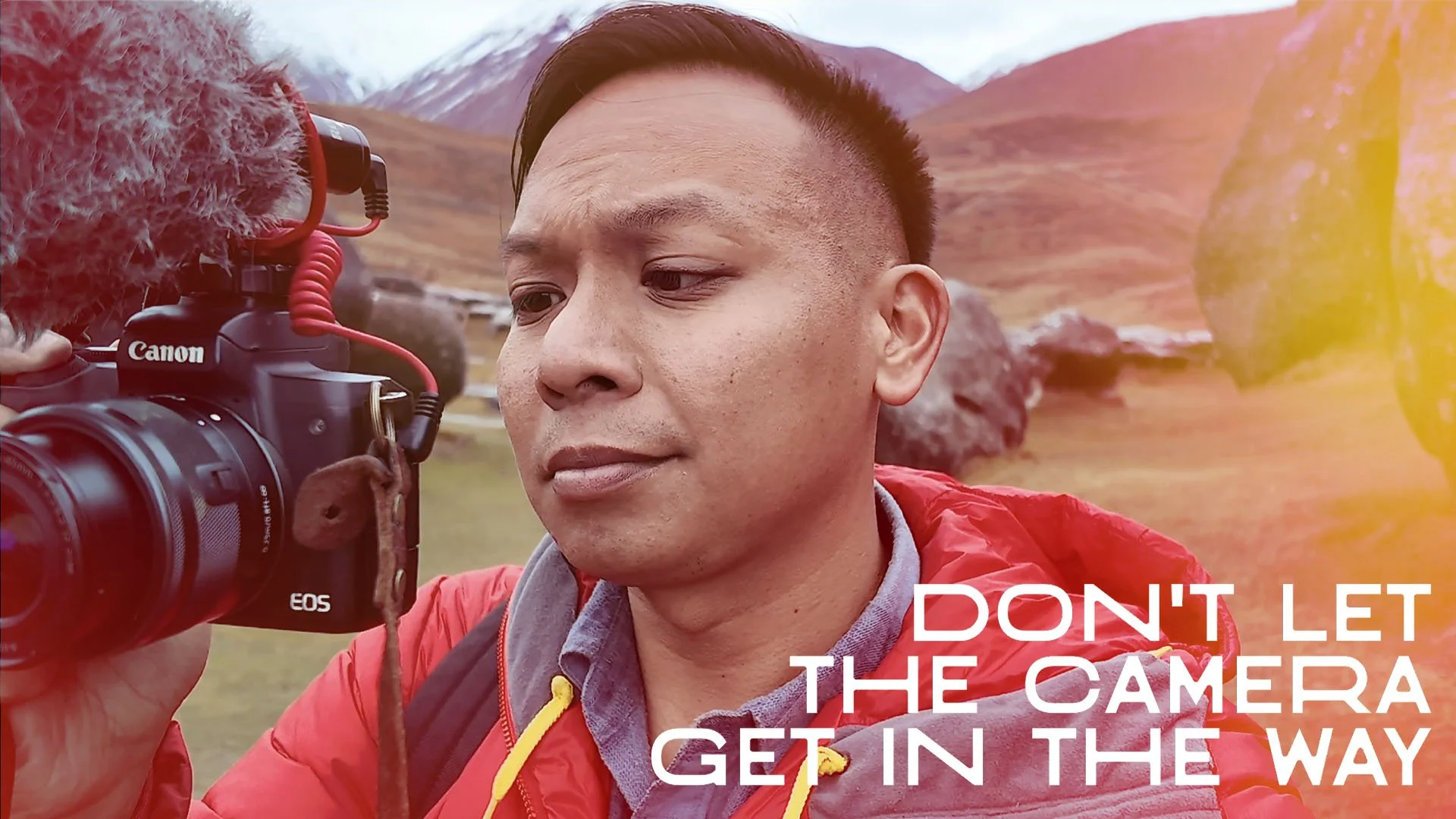
I've been capturing stories and recording life for years! And while I love being able to craft videos afterwards, I never want getting the shot to get in the way of living the moment.
My process now prioritizes:
• Discreet gear that doesn't take long to set up
• A shotlist that keeps the amount of time I spend behind the lens to a minimum
• A process that allows me to focus on getting the right clips rather than trying to film everything Here's a bit about that!
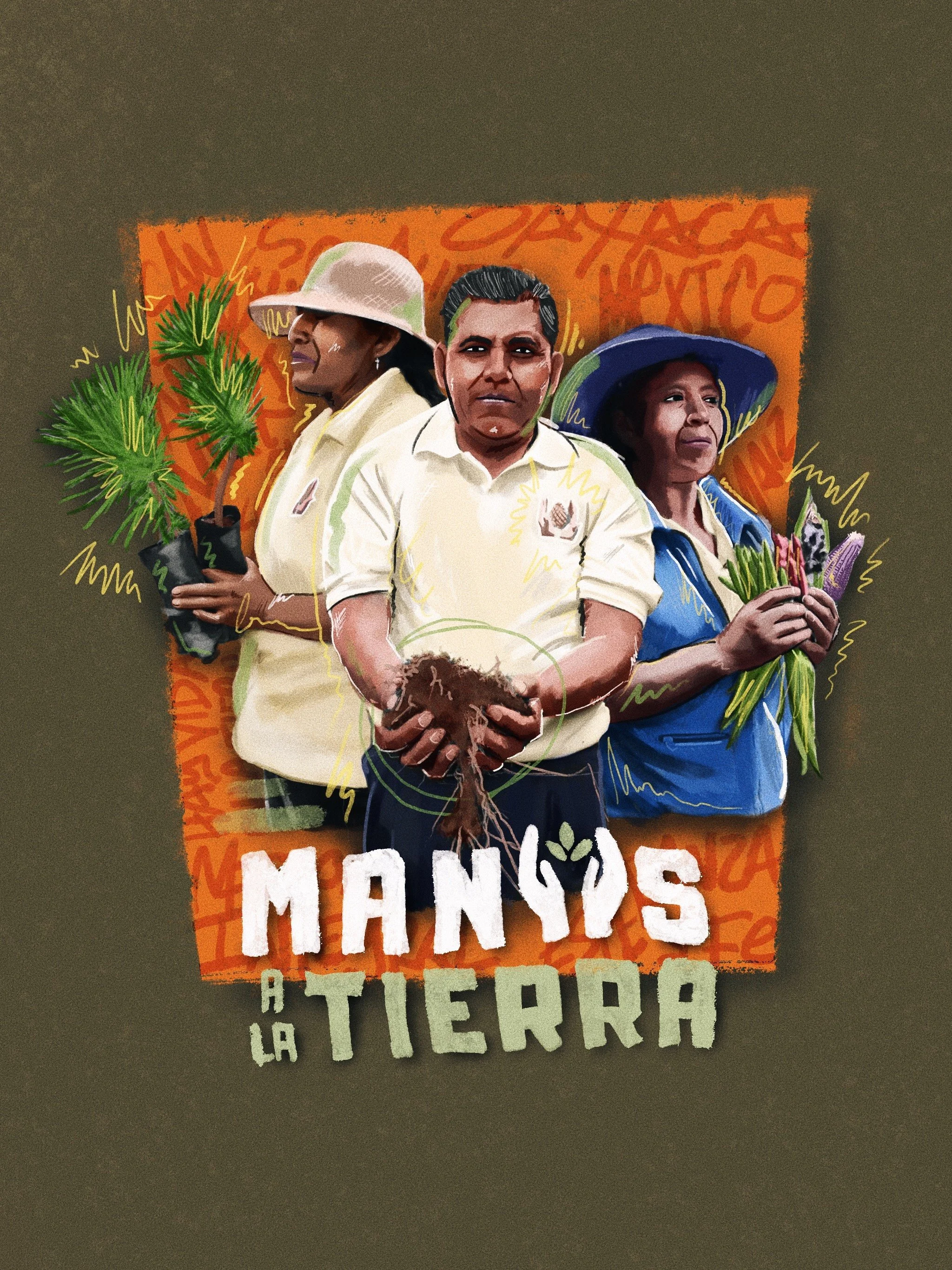
Sometimes the path out of poverty starts with how we see people.
There are few countries I have as unique or a relationship with as Thailand. I recently made my fifth trip back, but each visit has introduced me to new communities and experiences.
This time around, I spent time with forestkeeping communities of ethnic minorities and got a good up close look at my team’s training center.
Have a look!

Ebru Baybara Demir began working with refugee women from Syria when its conflicts began to escalate. After the region was hit with massive earthquakes a couple years ago, she operated pop up soul kitchens in the affected area of a to keep people fed.
Since then she has been running an agricultural co-op, helping women and refugees further their culinary and business skills.
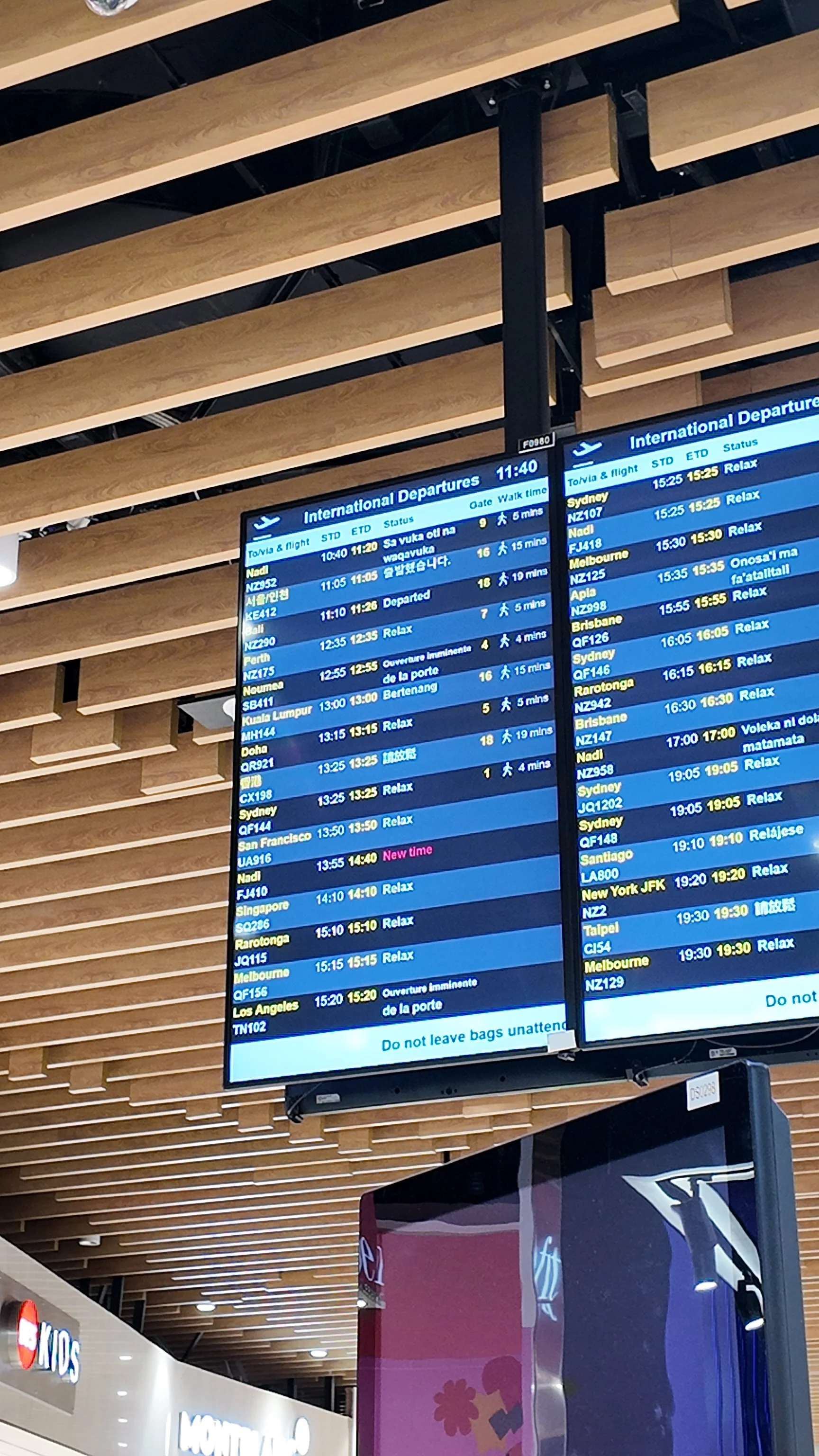
I appreciate how committed the Auckland airport is to telling travelers to relax.

New Zealand’s signature ice cream flavor: Hokey Pokey
Vanilla with bits of honeycomb toffee.
A fact I made up is that Tip Top might as well be New Zealand’s version of Thrifty Ice Cream. Feels like that could be true.
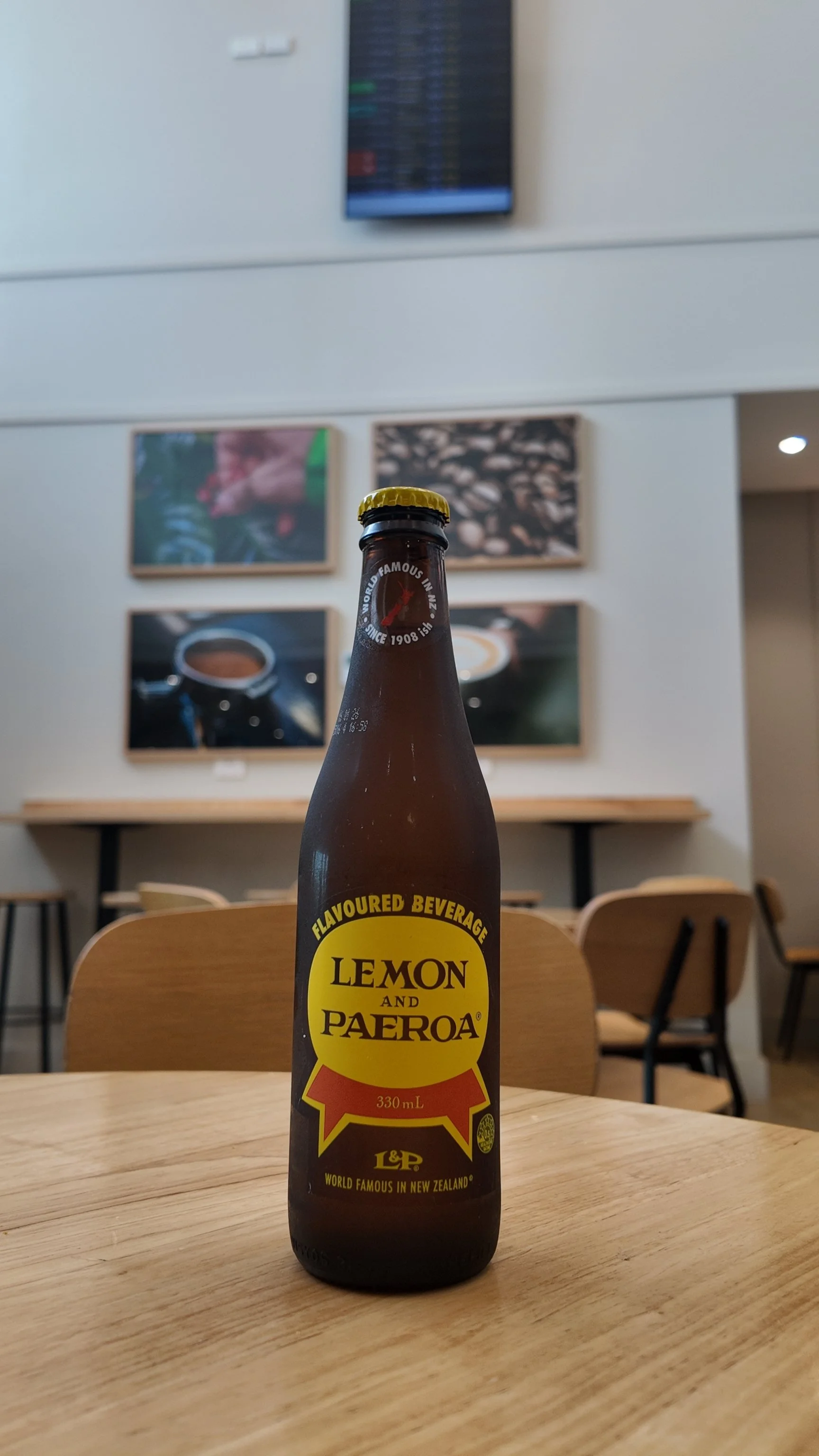
You down with L&P?
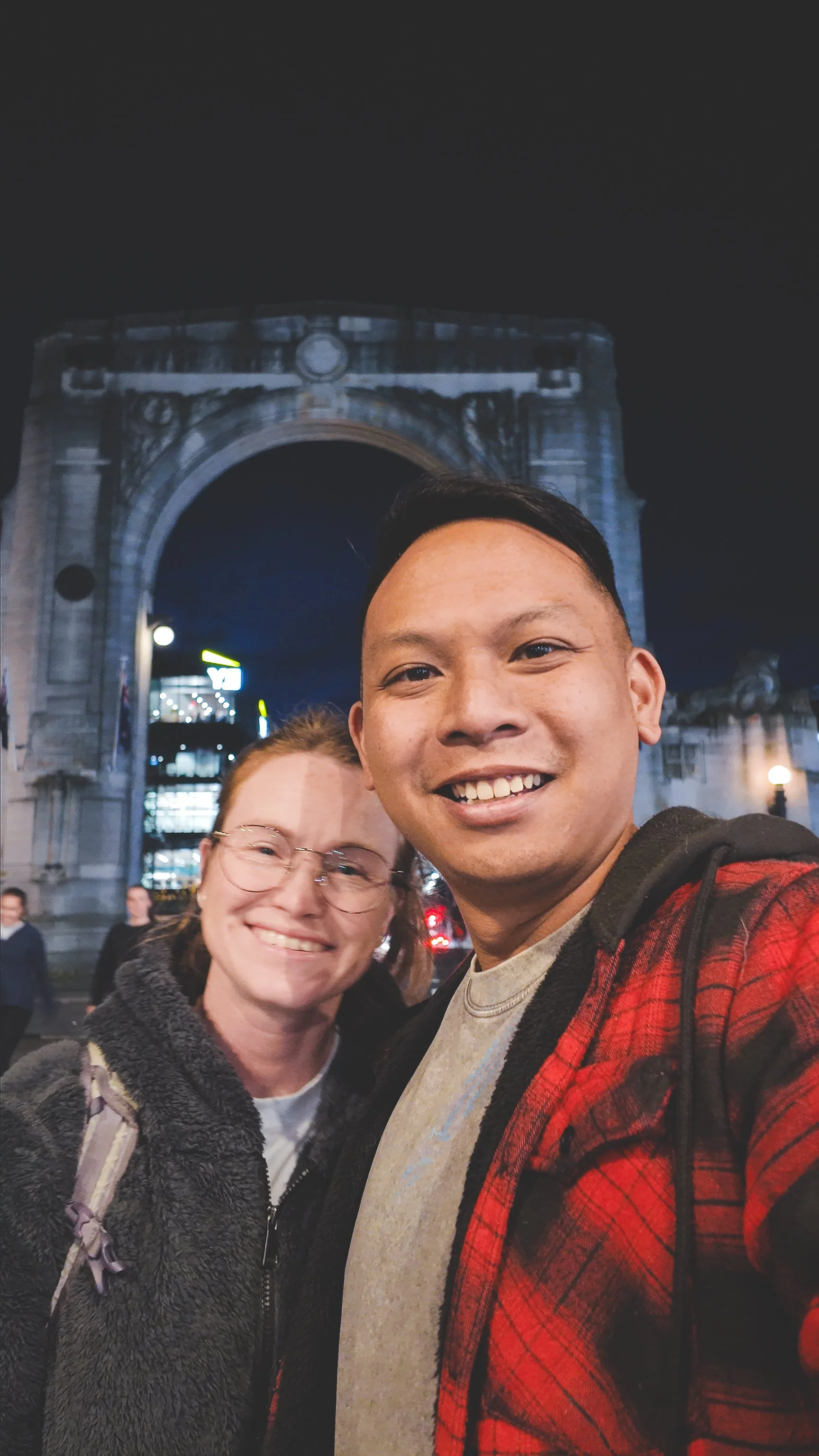
It’s not often that I have much to say about the large memorial landmark in the middle of a city, but I do appreciate the Bridge of Remembrance. This arch has layers!
It’s photogenic. It casts great shadows and reflections off the Avon River. It’s survivorship of the 2011 earthquake adds to its tribute. Its inscriptions of various WWI battles from Belgium to Palestine will make you want to do a historical deep dive. And it’s location makes it a great pin to use as the heart of the city, right by all kinds of restaurants and hangouts.


My favorite single activity of our time in country was the glow worm caves in Waitomo. There are many different operators offering boat rides, including as much as an 8 hour raft journey.
Ours was much shorter and absolutely stunning.
It’s a sacred Māori site so I don’t have a single photo from inside the cave. Google has a bunch, though, so someone was okay with it!
I am rarely the type to say this, but not being able to document it sort of made it even more magical.

Pretty lucky this is what my business trips look like.
It was 2022 and I was giving a talk. I mentioned that I was quite optimistic when it came to climate action compared to most people I work with. I cited a few facts and figures, pulled up some infographics about carbon emissions trending down, and noted that two of the strongest bits of climate legislation in my lifetime were signed just that summer.
One of them–the Inflation Reduction Act was projected to result in a noteworthy drop in emissions, though it alone wouldn’t quite be enough to totally solve climate issues. Still, it would have given clean energy industries and infrastructure a boost for things to move in a positive direction.
Now it’s 2025, and that feels quite long ago, doesn’t it?
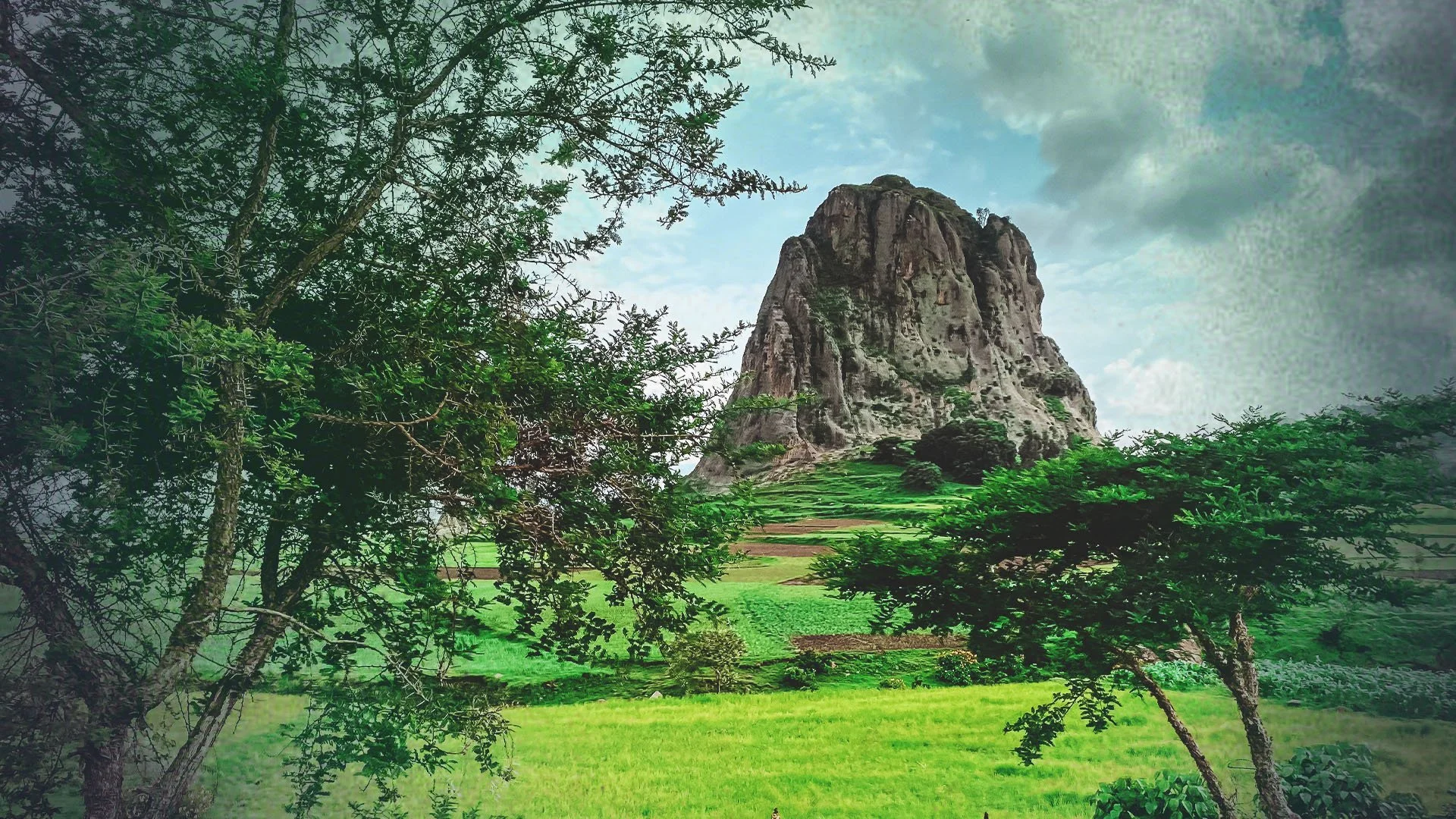
This month, those proposals were effectively gutted as part of the new Congressional Budget Bill. The projections for emissions no longer look that promising. The US also squandered its opportunity to be the world leader in the energy industries that will dominate the next century, a role China looks eager to take. But considering that the US is a massive country in terms of both land and population, it’s a pretty bad blow to the planet.
So, in the year 2025, I couldn’t possibly still be saying climate and optimist in the right sentence.
Right?
Before I flesh out my answer, I need to highlight a few things I also said in that same talk:
Climate optimism shouldn’t whitewash the very real problem of climate change and the way it affects people. I spend a lot of my career talking to people like Albert, a farmer in Burundi, or Esperanza, a mother in rural Mexico and I’ve seen very directly how their lives are threatened by environmental problems. I may have a stronger sense of optimism around the environment, but that also comes with a stronger awareness of the stakes.
Optimism isn’t necessarily a virtue. Optimism is largely a function of privilege, brain chemistry, and the mysterious item of personality. These are things people have no control over, for the first part. I happen to be born with a set of circumstances and brain chemicals that make it easier for me than most people. I didn’t do anything to earn that.
Hope, on the other hand, is a virtue. I make the distinction between hope and optimism by saying that optimism is a feeling, but hope is where we plant our feet. I work with many people who feel like they’re fighting a losing battle but still show up to fight. That’s hope. Even without the optimism. Especially without optimism.
Climate ambition in the United States. has taken a huge step backwards. Most people I know working for a more sustainable future are extremely discouraged and they have reason to be. It’s a reasonable way to feel.
But at the same time, it’s not game over and the work isn’t done. If anything, there’s a lot more of it to be done.
The United States is an important actor when it comes to climate, and perhaps the most influential, but it’s far from the only source of impact.
Seven-eighths of carbon emissions are outside of the United States. The largest emitter, China, represents about a third of emissions around the world and clean energy is driving its number downward in a hurry. Its emissions have likely peaked this year. Russia and Brazil are also likely close to their peak. Japan, the UK, the European Union, Canada, and even the US have already passed their peak. As more African and South Asian hubs gain access to electricity, they are increasingly drawing it from clean sources.

Within the US, climate policy has several different layers. There’s federal policy, of course, which hasn’t been too encouraging lately. But state policy also has a big impact on things like land use, transport, and energy. Counties, cities, and other districts also determine a lot around transport, green space, farming, and housing, and this is often where people have the most success at getting involved.
And it’s not just government! Good thing, huh? There are so many other sectors that ultimately shape climate action. Business, industry, and marketing fields are incredibly influential, especially in the US. Working in tech, energy, or engineering opens up new opportunities to reach goals. Anyone working on farms or with food also has direct access to a very important sector. Consumers have a lot of influence through their choices and can often force governments and corporations to keep up with their preferences. Educators, artists, and communicators can help shape those priorities.
This isn’t to invalidate legitimate concerns people have. The urgency around climate action means that we need all actors to play their part. When they’re in sync, different levels of government can create a multiplier effect with each other. Different sectors can open doors for each other. All the things are in relation to each other.
Unfortunately, we likely won’t really have synergy on that level for some time, but it does mean all our eggs aren’t in that single basket. Real good news given the state of our current basket.
Over the past twenty years, there have been very few moments where all of the political stars have aligned to get anything done environmentally, at least at the federal level.
The amount of improvements in emissions reduction in spite of that lack of political support is actually pretty encouraging.
When Barack Obama took office in 2009, one of his biggest goals was a comprehensive climate bill. Ultimately, they never made it past Congress. The Waxman-Markey Bill and the EPA’s Clean Power Plan failed to get the support they needed. But what happened next is kind of interesting.
Based on projections made while these policies were being debated, they would have reduced emissions by about 1100 Mt CO₂ between 2010 and 2019. However, the US managed to reduce its emissions by 1,450 Mt CO₂ on its own, without the support of these policies.

It goes without saying, we would’ve likely fared better with the extra push, but still… things turned out much better than one might’ve expected when those policies failed to become law.
There are a mix of reasons why. The cost of wind and solar energy became way cheaper than anticipated, making them more accessible. The coal industry also collapsed, and while some of it was replaced by fracking, that still accounts for some drop in emissions. There was an uptick in electric vehicle use that seemed unproven in 2009. And while federal legislation didn’t go through, a lot of states passed bolder clean energy laws. When larger states like New York or California pass high standards, companies are especially incentivized to cater to their big markets.
On top of all that, there was a greater cultural shift towards people prioritizing sustainability. While little things like Meatless Mondays or reusable burlap totes seem really small, those signals add up and send a message to corporations and industries that these things are a priority for people.
This over-performance in spite of legislative support is something that Robinson Meyer has written about, labeling the phenomenon The Green Vortex. It’s a surprisingly encouraging report and one that I think holds a lot of relevance for where we are right now. Without top-level support from the United States, it’s still very much possible to keep moving the needle in the right direction. It has happened before.
In spite of the setbacks, coal and fossil fuels remain risky investments. Renewables and clean technologies continue to grow, even within the United States. The economic scales have already been tipped in favor of the future.
Lately I’ve been seeing a post from a highly regarded environmentalist and academic who has essentially said “It’s too late to stop climate change. Game over.” It’s tough because this is somebody who I respect a lot, but can’t get behind the sense of defeatism.
In some senses, he’s not totally wrong. There are aspects of climate change that are already in effect that are irreversible, at least practically speaking. But far too many people see climate action in a very black-and-white, pass-fail sort of way.
It’s not like that.
Yes, we have this target of keeping average annual temperature change under 1.5ºC. But if we fail at that, it’s not game over. It means we work to keep it under 1.6ºC. Or better yet, 1.51ºC, or 1.500001ºC… you get the logic.
Within each of those slivers, fractions, and decimals are places, people, and forms of life you love. Things worth saving.
It’s more like a house fire. If your stove catches fire and you fail to save the kitchen, you don’t just give up. You protect the dining area and the living room. And even if you lose that, you work to contain the damage as much as possible for the sake of things worth saving.
That’s why in spite of every setback, I think it’s necessary for me to remain a climate optimist. Not everybody can access optimism as easily as I can, and that’s fine. What matters more is that people spring into action, so if I can leverage just enough optimism to catalyze that, so be it.
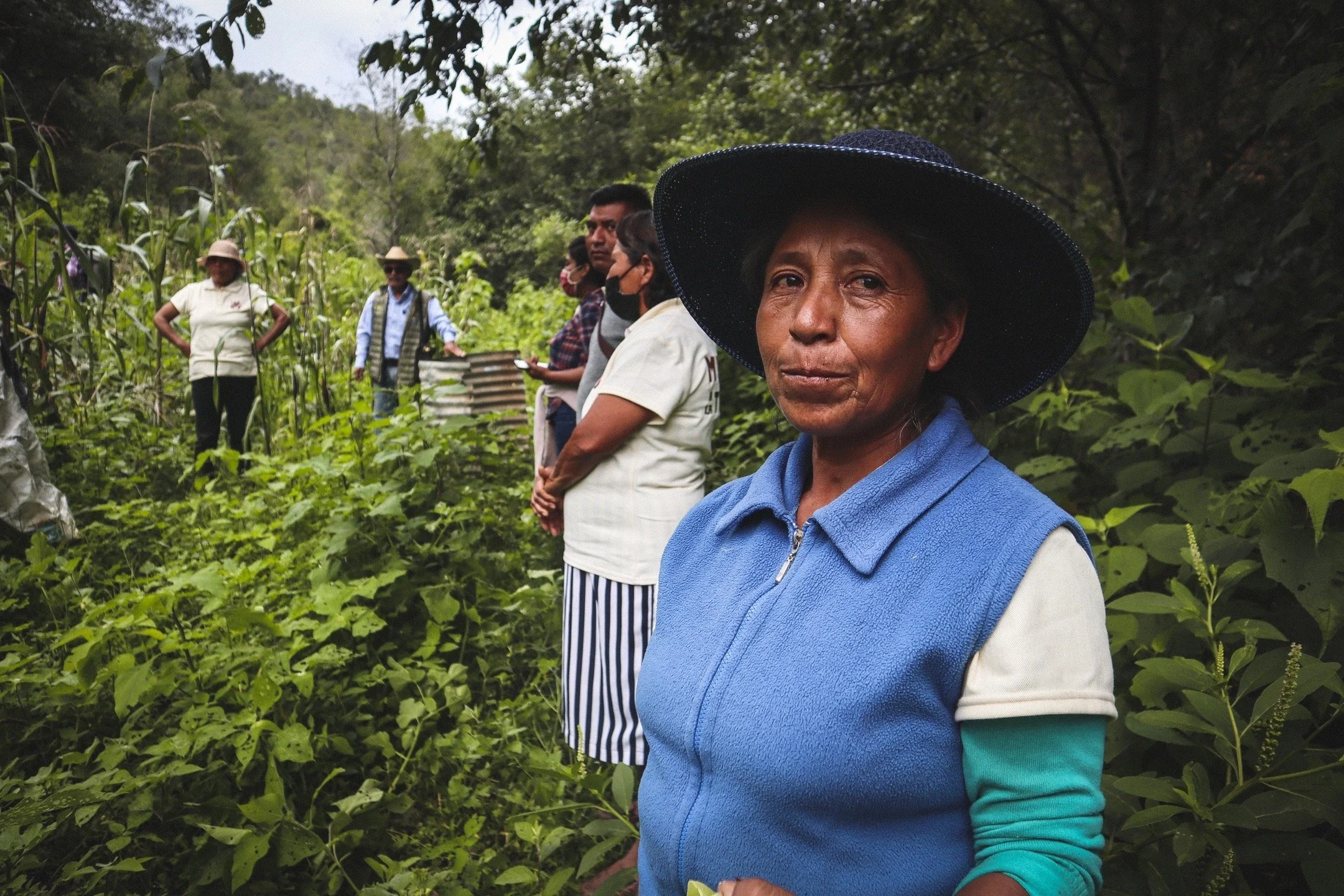
After all, the thing that keeps me the most optimistic isn’t some hypothetical political pendulum swing. It’s not the numbers, or the Green Vortex. It’s the others. People like Esperanza in Mexico. Albert in Burundi. Mesfin in Ethiopia who excitedly tells me about his plans to replant an entire hillside.
I’m grateful that I get to work towards a healthy planet shoulder to shoulder with people like Mesfin. Or organizations like BEDS building eco-villages in the Sundarbans. Or my friend Jamie who has a knack for pitching sustainability towards business leaders.
For me, climate change often looks like numbers on paper, but for Mesfin it looks like food for his family. And yet, he hasn’t given up. If he hasn’t, I don’t think I have any right to.
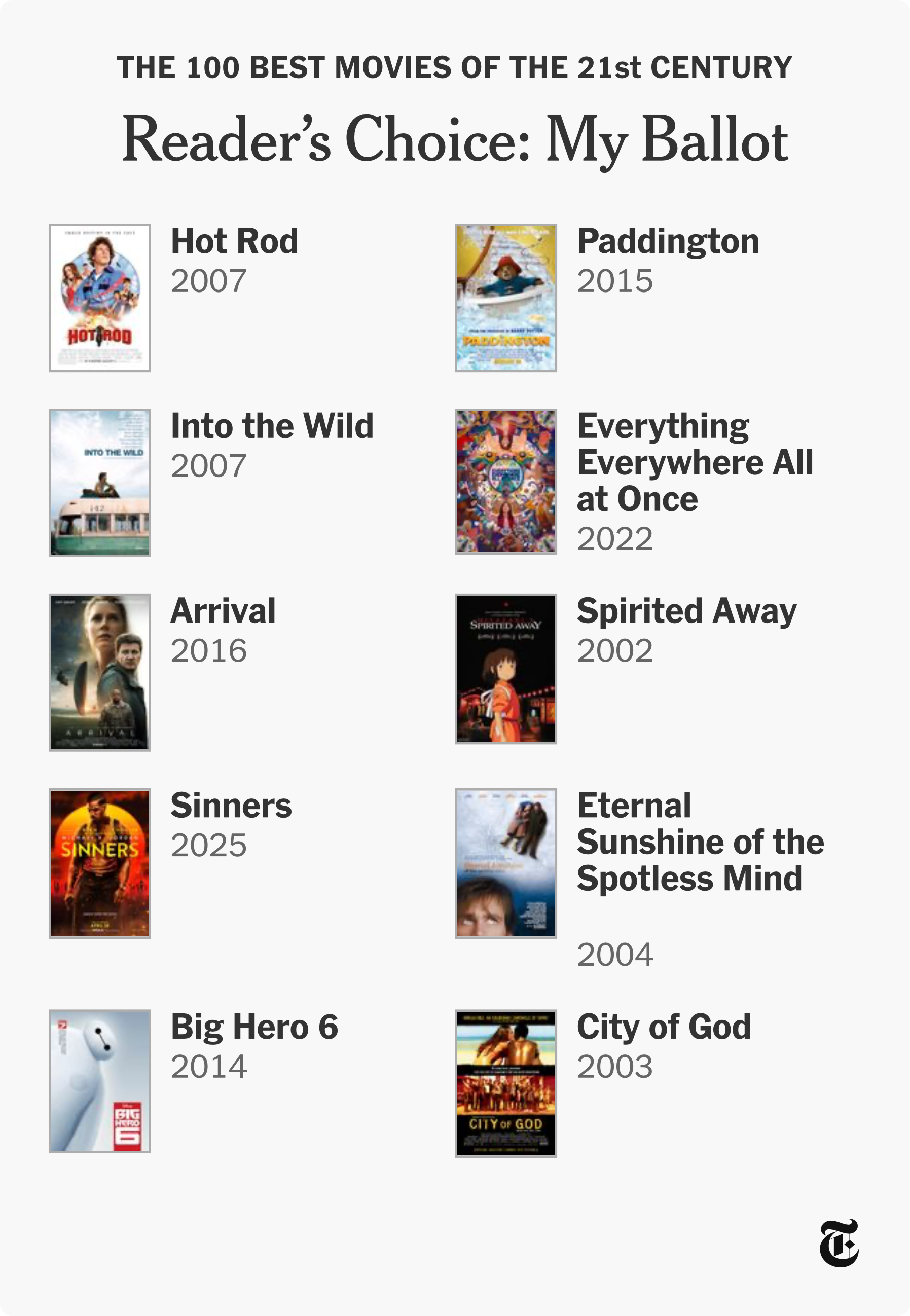
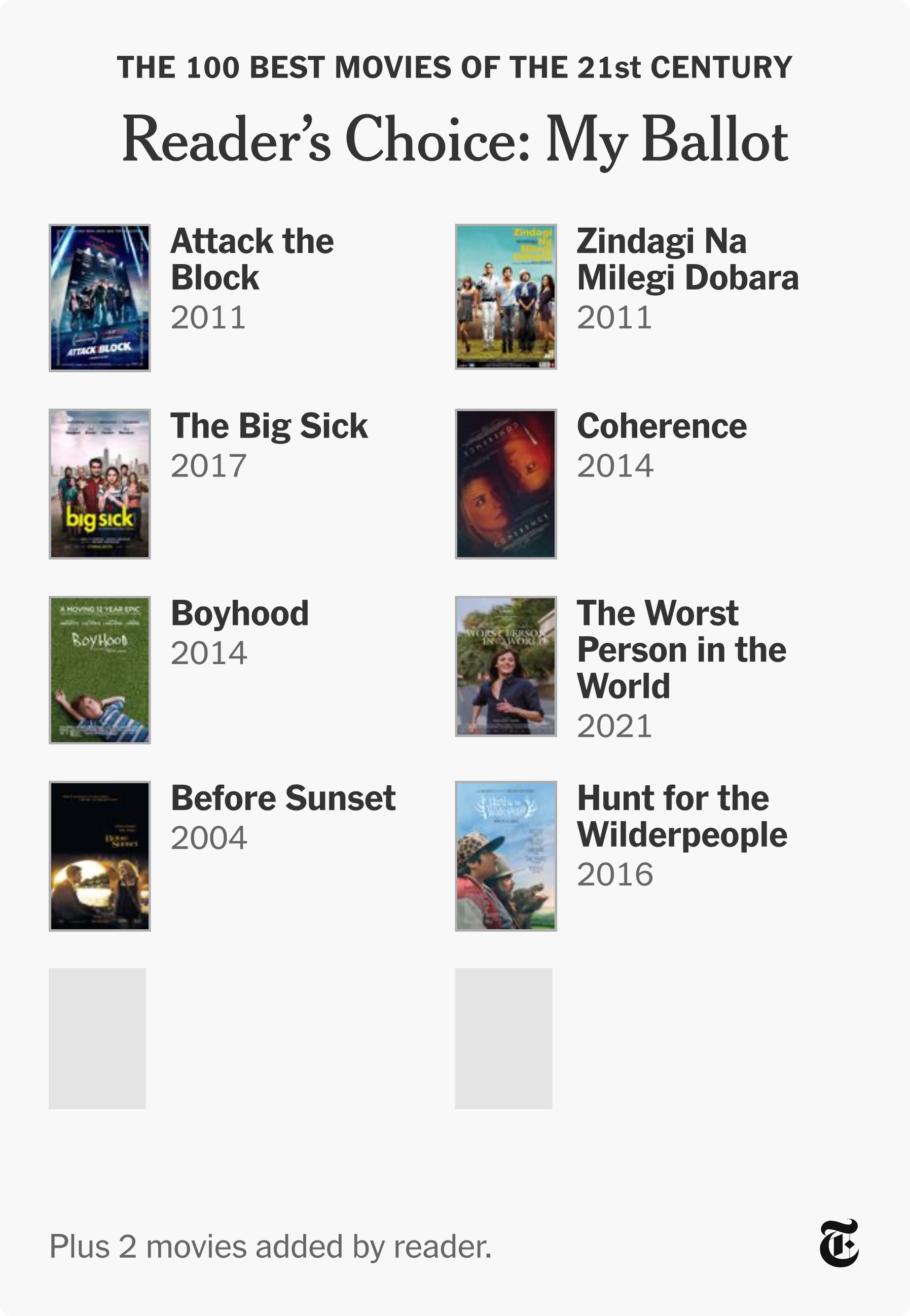
I finally got around to doing my NYT Reader’s Ballot for the best films since 2000… I’d say my selection’s all over the place, but these are probably the stories that made the most lasting impressions on me for a wide variety of reasons.
I dropped out of film school 15 years ago and still have no desire to watch everything like a 🧐 proper critic.
Hot Rod – Because the list would feel dishonest without one of the films I’m most likely to spontaneously quote, 18 years after the fact.
Paddington – I know Paddington 2 is the Rotten Tomatoes darling, but I have a soft spot for the bathroom scene here.
Into The Wild – The emotional grip this film had on mid-2000s high schoolers! Hits even harder having later gone to sites like Salvation Mountain.
Everything Everywhere All At Once – A film that manages to pull meaning and sweetness out of chaos and absurdity, I think in retrospect we’ll be amazed at how this relates to the time it was made in.
Arrival – Perhaps the smartest film on the list.
Spirited Away – We needed at least one representative from the Ghibli delegation, and I think Spirited Away best captures its mix of sweetness, weirdness, and world-building.
Sinners – Convinced this isn’t recency bias. So, many, layers!
Eternal Sunshine of the Spotless Mind – I’ve long cited this as my all-time fave, and have found no reason to think that’s not still true.
Big Hero 6 – Honorable mention to Up, Coco, & Inside Out, I could’ve easily made an entirely animated version of this list.
City of God – Brazilian epic. I really like stories told at a generational scale like this. If you’ve seen this and liked it, check out Jerusalema: Gangster’s Paradise from South Africa.
Attack the Block – Creative British bit, criminally underrated. Takes gang logic of Protecting the Block and applies it to an alien invasion.
Zindagi Na Milegi Dobara – One of my favorite travel movies, an Indian made road trip film set in Spain.
The Big Sick – No frills, and a ton of heart, and between the chronic illness and Asian-American pairing, found so much relatable.
Coherence – This is the film I point to when telling people about my fondness for puzzle films.
Boyhood – Again, a story told at generational scale hits my sweet spot.
The Worst Person in the World – An unlikely Norwegian film that makes me appreciate life
Before Sunset – Love the whole trilogy, and Linklater.
Hunt for the Wilder People – Taika at his best.
And the two that NYT wouldn’t even recognize…
Son Of Rambow – This is a very good and very cute British film that introduced the world to a very young Will Poulter. I used to use it as an ace-up-the-sleeve for date night. Ironically, Deanna didn’t care for it as much. I think she was expecting a literal Rambo sequel
Swan Song – You know how there are seemingly a ton of stellar shows on Apple TV that you never hear about because they don’t advertise? This is the movie equivalent.
TEN YEARS
Three kiddos, a pair of careers, a cheeky rescue dog, dozens of trips, Oregon to San Diego… and all the unpictured stuff like holding each other through health scares, long waits, and putting in the work.
What a decade!
2015 - The year it all began.
2016 - The year of a big health scare and bringing home Beignet.
2017 - The year we left Oregon for San Diego.
2018 - Iceland, England, Italy… The last time we managed an international trip with just us two… until now! Why’d it take so long? Because–
2019 - The year we became parents.
2020 - That one year. But hey, Deanna got her social work license!
2021 - The year we became parents to three. Hello twins!
2022 - The year of three under three and attempting a few trips with them.
2023 - The year of then bringing that crew to the Philippines.
2024 - The year of Rhys starting school, Portugal, Spain, and learning how ruthless flu season is with a house of three preschoolers.
2025 - Celebrating all that in New Zealand!
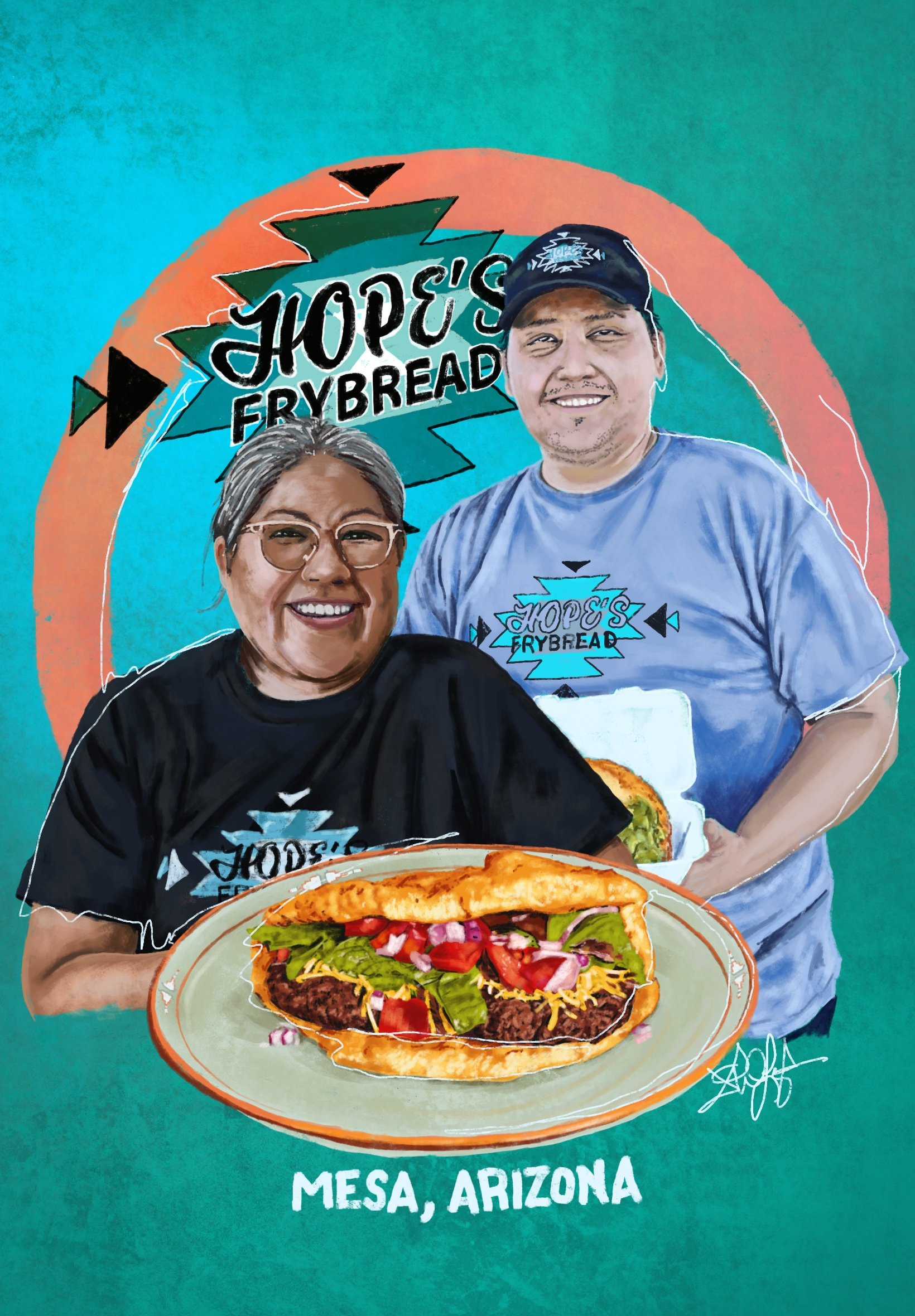
Pro-tip: If you ever find yourself anywhere near Mesa, Arizona, swing by Hope’s Frybread.
Great Dinè owned joint with a creative menu and bright art all over the place.